
Last updated September 20, 2026
Free on-site gate assessment - hinges, posts, and your LiftMaster or Nice gate operator checked before anything is quoted
The assessment is free and the quote is the invoice.

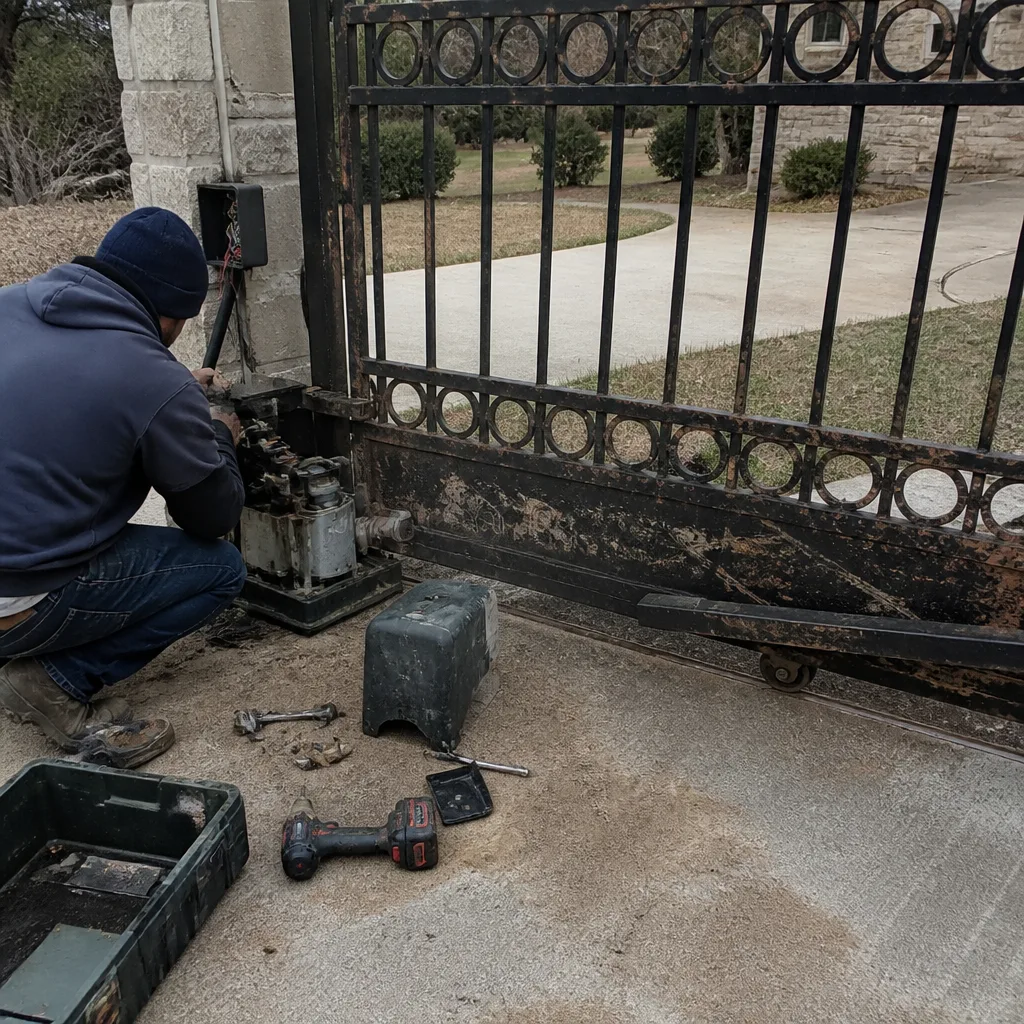 Before
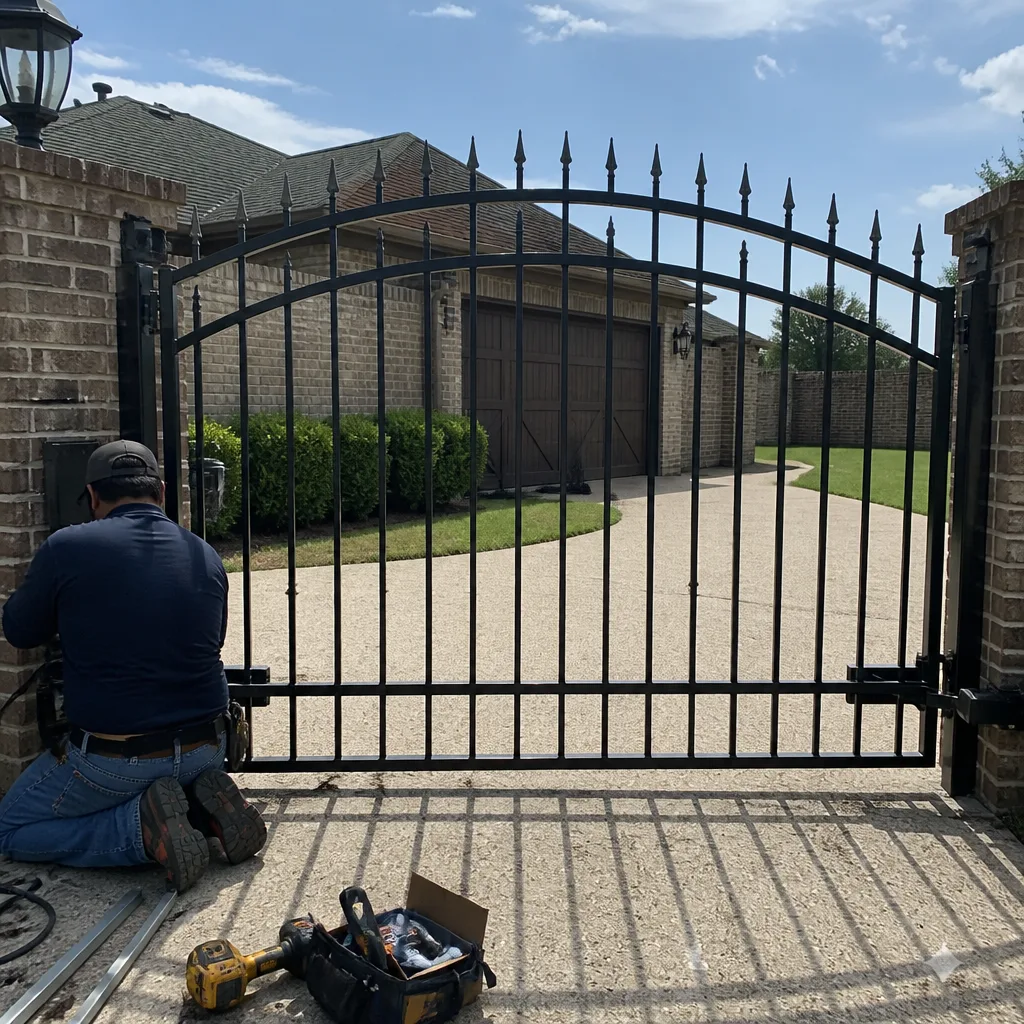 After
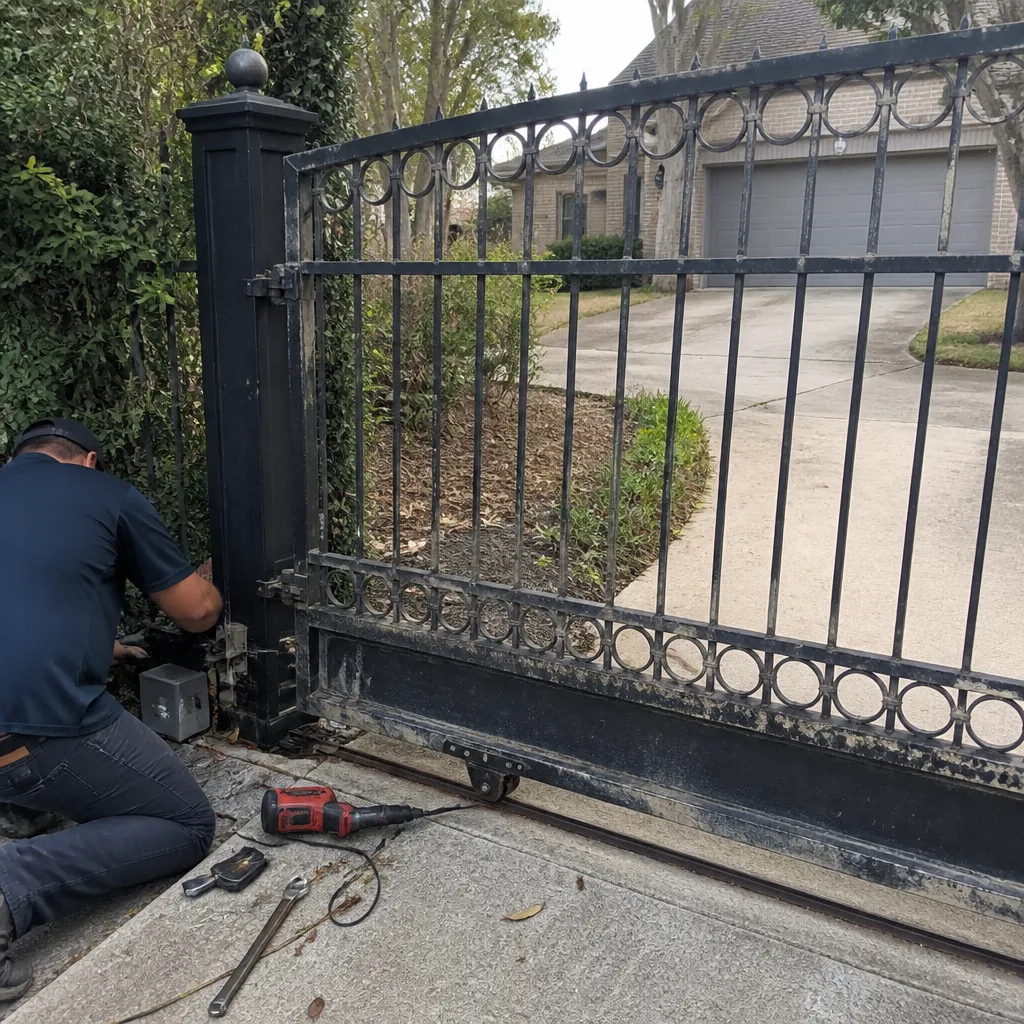 Before
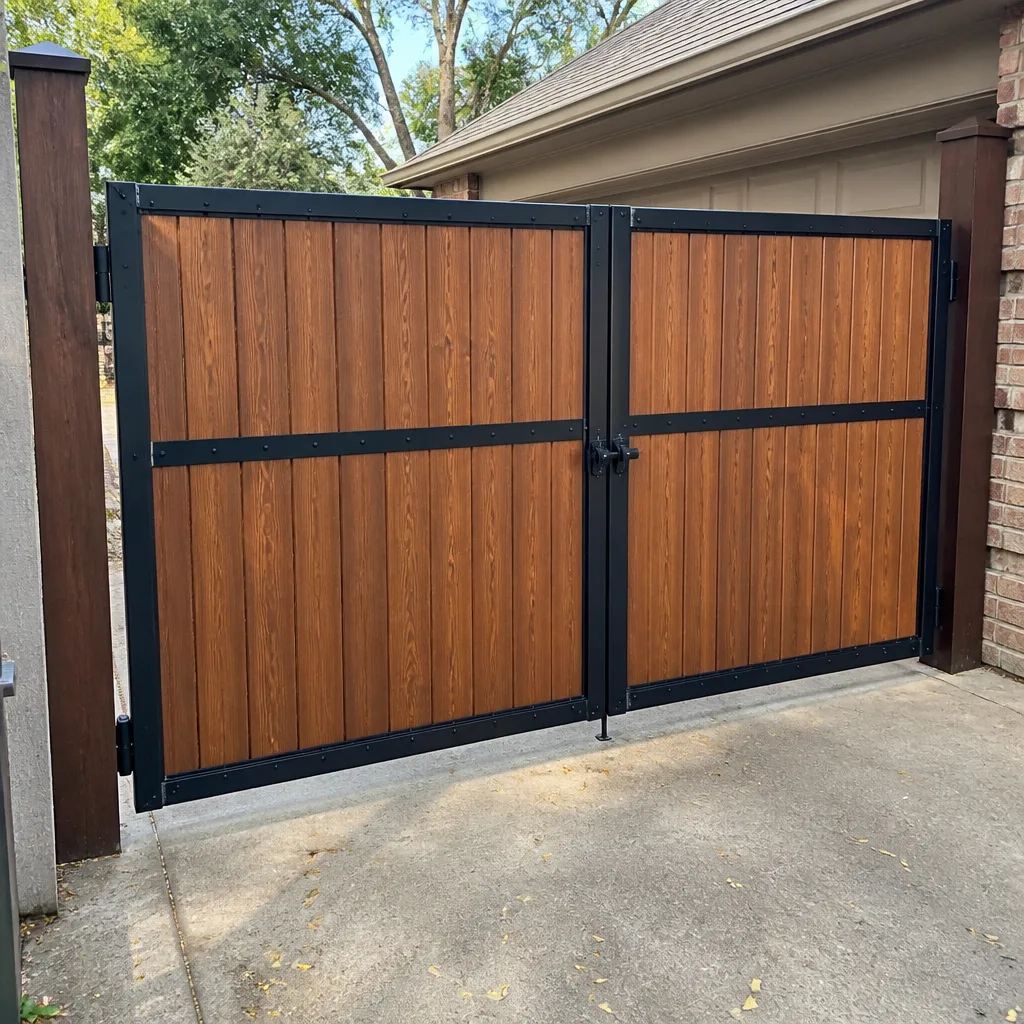 After
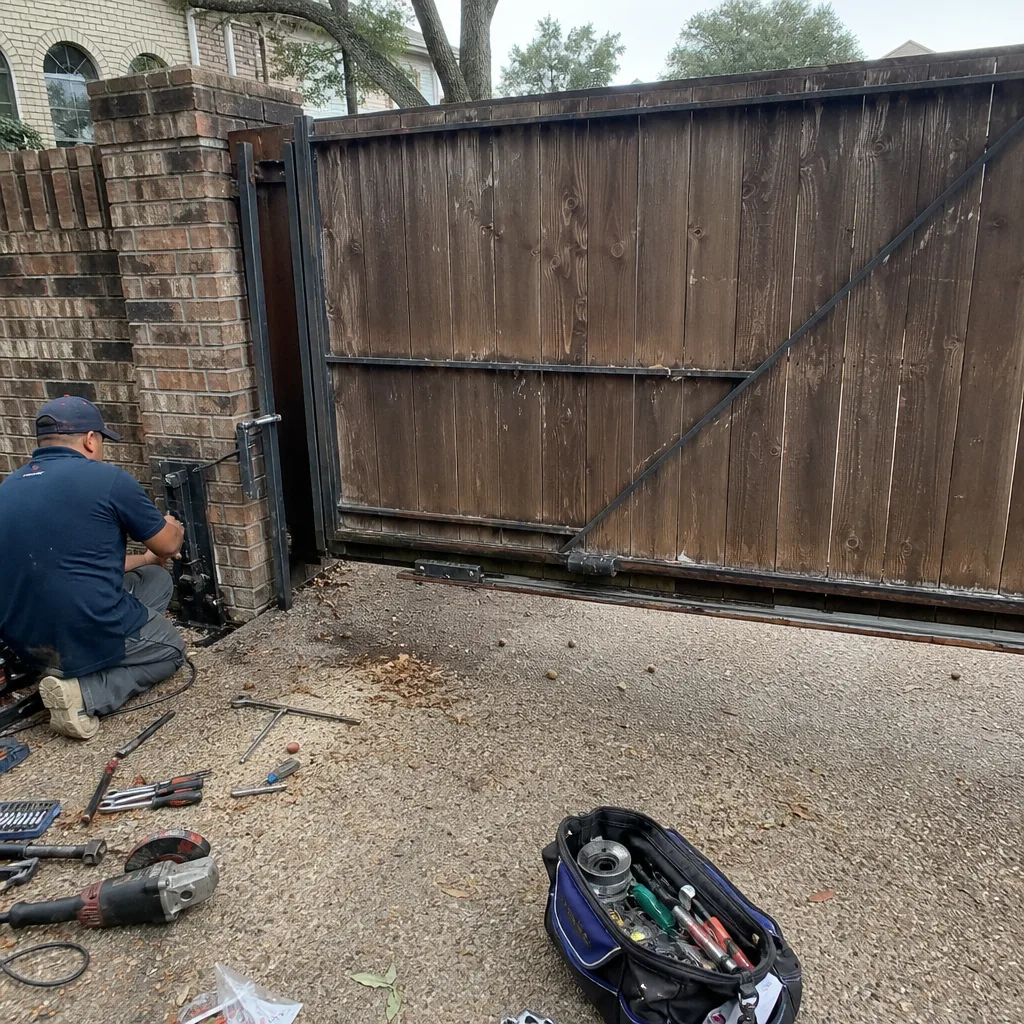 Before
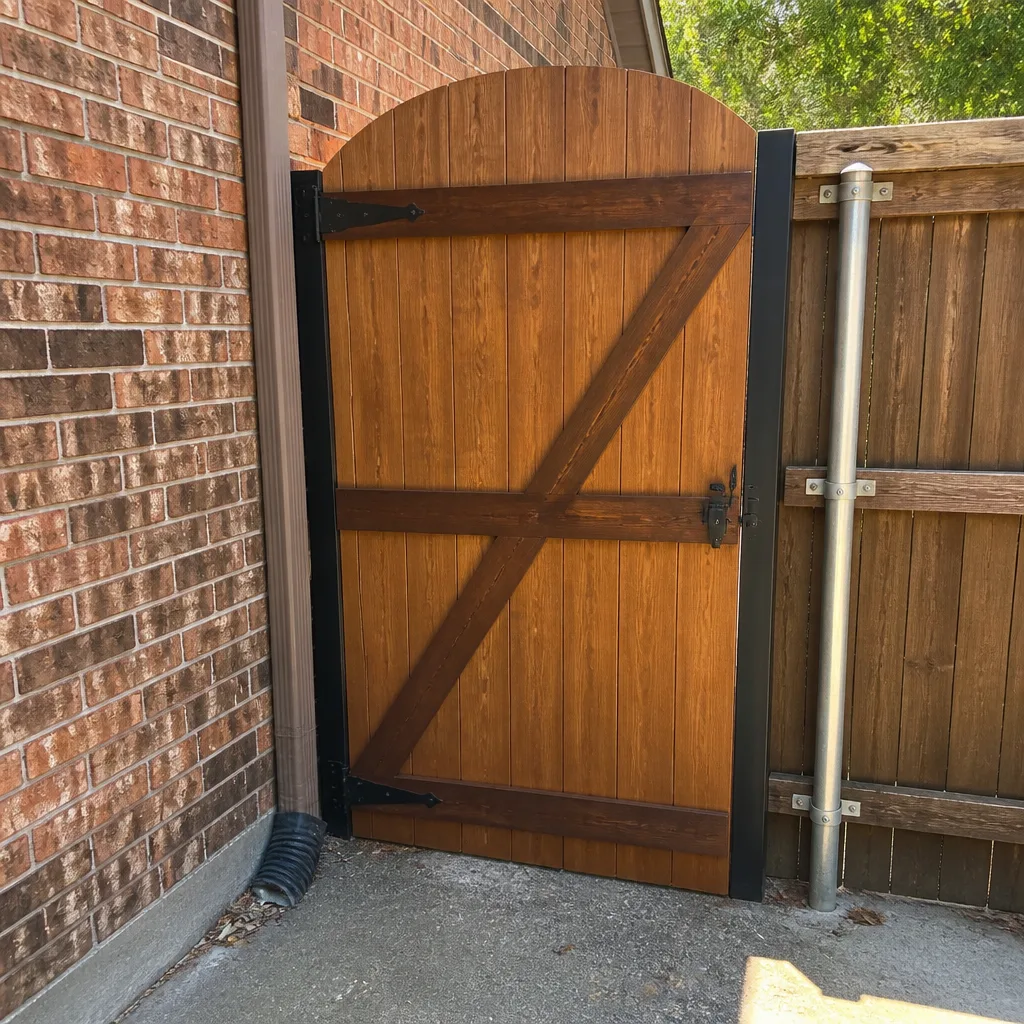 After
Gate Repair Permits, Codes & Inspections in TX: What You Need to Know
A Bedford homeowner paid $4,200 for a new automated driveway gate in 2023. The operator shorted eight months later, the wiring ignited, and the fire damaged the gate, a section of fence, and part of the garage wall. The insurance carrier denied the claim. The reason was not fire damage. The reason was that the installation pulled a new electrical circuit without a permit, which voids the liability portion of most Texas homeowners policies. The permit would have cost about $75 and taken one afternoon. This guide explains where that line sits for gate work in Texas, what triggers a permit in Bedford and Tarrant County, how UL 325 changes your liability, and how to document an unpermitted prior installation without making the situation worse. For related reading, see our Gate Repair Warning Signs: A Bedford Homeowner’s Reference Guide. If you own an automated gate or are planning one, the next 4,000 words are the cheapest insurance you will ever read.
Quick Answer
Most Gate Repair work in Texas does not require a permit. Replacing a hinge, a wheel, a keypad, a photo-eye, or a swing-arm operator on an existing circuit is routine repair work under the state’s adopted codes. You need a permit when the work touches the electrical service (a new circuit or subpanel), when you replace a structural post embedded in concrete, or when you install a new automated gate system from scratch. In Bedford, that permit runs through the city’s building inspections division and typically costs between $50 and $150 depending on the scope. The safest way to answer the question for your specific gate is to call the City of Bedford Building Inspections line, describe the work in one sentence, and write down the name of whoever answers.
Table of Contents
- Where the Permit Line Actually Sits in Texas
- Bedford and Tarrant County: What the City Actually Checks
- When HOA Rules Are Stricter Than City Code
- UL 325 and Why Non-Compliant Automation Affects Insurability
- The Inspection Process for Permitted Gate Electrical Work
- How to Retroactively Document an Unpermitted Prior Installation
- What Gate Permits and Inspections Cost in Bedford
- Common Mistakes to Avoid
- When to Call a Professional
- Frequently Asked Questions
- The Bottom Line
BeforeAfterWhere the Permit Line Actually Sits in Texas
Texas does not have a single statewide gate permit requirement. The state adopts the National Electrical Code (NEC) through the Texas Department of Licensing and Regulation, and individual cities like Bedford enforce their own amendments to it. What that means in practice: the question “do I need a permit for gate repair in Texas?” only has a real answer when you attach a city name to it. In Bedford, the answer depends on which of three categories the work falls into.
The first category is routine repair, which covers almost everything a homeowner calls a gate repair company about. A sagging gate that needs a new hinge. A slide gate whose rollers have worn flat. A keypad whose buttons no longer respond. An operator arm whose internal gears have stripped. A photo-eye that has drifted out of alignment. None of these pull a new wire from the panel, none of them disturb the structural integrity of the posts, and none of them add a new automated system to the property. Bedford does not require a permit for this work, and neither does Tarrant County.
The second category is electrical service work. This is where the Bedford fire claim went wrong. If the job requires a new breaker in the panel, a new circuit run to the gate, a new subpanel at the gate location, or an upgrade from a 110V to a 220V circuit for a heavier motor, you are now doing residential electrical work. That requires an electrical permit in Bedford, full stop. The same is true for adding a battery backup that ties into the property’s permanent wiring rather than a plug-in transformer.
The third category is structural work. Replacing a gate post is not like replacing a fence picket. The post carries the weight of the gate leaf, absorbs the stress of every open and close cycle, and on an automated gate, it anchors the operator arm bracket. In Bedford, replacing a post that is set in concrete and carries an automated gate leaf generally falls under the city’s residential building permit requirements, especially if the driveway gate is masonry, metal, or otherwise exceeds the city’s fence-height allowances. A hand-set 4×4 wood post for a decorative garden gate usually does not. The line sits at whether the post is load-bearing and whether the gate is automated.
New automated gate installations are the clearest case. If you are taking a manual gate and converting it to a motorized one, or installing a new motorized gate from scratch, Bedford requires a permit. The reason is not bureaucratic. It is because an automated gate is a machine that moves under power, and when it is wired incorrectly, it can start a fire, injure a child, or trap a vehicle. The inspector’s entire purpose is to look at the work before anyone gets hurt.
We’ve repaired gates across the Dallas-Fort Worth metro, and the pattern is consistent. The homeowners who get into trouble are almost never the ones who pulled the permit. They are the ones who were told by a handyman or a low-bid contractor that “you don’t really need a permit for this” and discovered the truth when something failed. The permit is not a tax. It is the document that keeps your insurance company on the hook.
Bedford and Tarrant County: What the City Actually Checks
Bedford operates its own building inspections division under the city’s Permit and Inspection Services group, and it enforces the 2017 NEC with local amendments. The city is small enough that a phone call gets you a person, which is not something every metro city can say. When we tell a customer in Bedford to call and ask about their gate, we are not passing the buck. We are telling them to get the answer in writing because that is the entire point of how we operate.
Here is what the city actually wants to see on a permitted automated gate installation:
- An electrical permit for any new circuit, breaker, subpanel, or wiring run from the house to the gate location.
- A building permit when new posts are being poured, when a driveway gate exceeds height or setback restrictions, or when the gate is part of a larger fencing project.
- A final inspection on the electrical work before the trench is backfilled and before the operator is permanently mounted.
- UL-listed components for the operator, the photo-eyes, the keypad, and the wiring method. The inspector will not approve a permit if the operator is a no-name import without a UL or ETL listing.
For most gate repair in Bedford, none of this applies. A repair that swaps a failed gear, resets a limit switch, replaces a keypad on an existing low-voltage run, or welds a broken hinge does not open a wall, does not touch the panel, and does not add a powered device. The city’s permitting guide for residential work confirms this: repairs that restore a system to its original condition without changing the electrical or structural scope are exempt.
One thing that catches Bedford homeowners off guard: the city inspects the trench depth for buried gate electrical. If you are running a new circuit to a gate operator, the inspector will check that the conduit is buried to the proper depth per the NEC and that the wire gauge matches the motor’s draw. A 14-gauge wire on a 20-amp circuit is a fail. An 18-gauge thermostat wire run in the dirt is a fail and a fire source. These are the small details that a permit inspection catches before the dirt goes back.
When HOA Rules Are Stricter Than City Code
Bedford has a lot of established subdivisions with active HOAs, and in many of them, the HOA’s architectural standards are stricter than anything the city enforces. The city checks safety. The HOA checks appearance, and sometimes materials, sound, and automation presence. A city permit will not protect you from an HOA violation letter. The two systems run in parallel.
In neighborhoods like the ones around Harwood Road and Forest Ridge, we regularly see CC&Rs that require architectural review before any exterior addition that is visible from the street. A driveway gate is visible from the street by definition. Our advice to any Bedford homeowner before ordering gate parts is to pull the CC&Rs and read the section on fences, walls, and driveway structures. Then email the HOA management company with a one-paragraph description and ask whether prior approval is required. Keep the email. It is the cheapest paperwork you will ever file.
Common HOA requirements we have seen in Bedford subdivisions:
- Gate design must match the home’s exterior style or use only approved materials (wrought iron, specific wood stains, specific metal finishes).
- Gate height is capped lower than the city’s fence maximum in some neighborhoods.
- Automated operators must be screened from view of the street, meaning the motor cannot hang off the front of the post in plain sight.
- Noise restrictions apply to certain gear-driven slide operators.
- Solar-powered gate openers are encouraged over line-voltage wiring in several newer developments.
We tell customers that the order should be HOA first, city second, installation third. An HOA can fine you for a non-compliant gate even if the city passed it, and some CC&Rs give the HOA the right to demand removal. The permit is about safety. The HOA review is about not getting a letter every month. Both matter. Both are knowable before you spend a dollar.
UL 325 and Why Non-Compliant Automation Affects Insurability
UL 325 is the national safety standard for automatic gate operators. It has been revised repeatedly since it was first published, and the current enforcement standard requires every automated gate operator in the United States to include two independent means of entrapment protection. The most common pair is a photo-eye across the gate’s travel path and an internal force-sensing circuit in the operator that reverses the motor when it detects resistance.
Here is why this matters in Texas. If your gate operator was installed without UL 325-compliant entrapment protection, and a person is injured by that gate, your homeowners insurance has grounds to deny liability coverage. Not because the injury is excluded. Because the installation was not code-compliant, and non-compliant installations are generally excluded from liability coverage under standard Texas homeowners policies. The Bedford fire claim denial I mentioned at the top of this guide is the same principle applied to a different component: a non-permitted, non-inspected installation shifts liability from the insurer to the homeowner.
What a UL 325-compliant installation actually requires on the ground:
- Two independent entrapment protection devices for every motorized gate leaf. A photo-eye on each side of a swing gate counts as one device. The operator’s built-in force reversing counts as the second. Some configurations require more.
- Warning signs posted on both sides of the gate, facing both approach directions, in accordance with the UL 325 signage requirements.
- An accessible manual release lever that disengages the motor so the gate can be moved by hand during a power failure.
- Photo-eyes positioned so they cannot be bypassed by a vehicle driving through the gate’s detection zone.
- Proper grounding of the operator and any metallic components, which is not optional and is one of the most common reasons a permitted inspection fails in Bedford.
We service nine automation brands including LiftMaster, FAAC, Elite, and Mighty Mule, and the compliance requirements are the same across all of them. The operator matters less than the installation. A cheap Mighty Mule installed with proper photo-eye placement, a grounded circuit, and correct wire gauge is safer than a premium LiftMaster wired with lamp cord and no entrapment protection. The inspector cares about what they can see and measure, not what the motor cost.
If you have an existing automated gate and you do not know whether it is UL 325 compliant, the fastest check is to stand at the gate with the remote and trigger a close cycle, then put a firm object in the path. If the gate does not reverse within two seconds of contact, your entrapment protection is not working. Then look for the warning signs. If they are missing, that is another compliance gap. Both are fixable without a full gate replacement, and in our experience most non-compliant Bedford gates are fixable for a few hundred dollars, not a few thousand.
The Inspection Process for Permitted Gate Electrical Work
When you pull an electrical permit for gate work in Bedford, the process is predictable. It is not mysterious, and the inspector is not trying to fail you. They are checking a short list of objective things, and if those things are right, the inspection passes and you have a paper trail that protects you. Here is what the process looks like, step by step:
- Permit application. You or your contractor files the permit application with the City of Bedford, describing the scope of the electrical work. For a new gate operator circuit, the description is typically “new 15-amp circuit for residential automatic gate operator.”
- Rough-in inspection. After the conduit is laid and the wire is pulled but before the trench is backfilled and before the operator is mounted, the inspector comes out and checks wire gauge, conduit burial depth, grounding, and box placement. This is the inspection that must be scheduled before the dirt goes back.
- Final inspection. After the operator is mounted, the photo-eyes are placed, the control board is wired, and the system powers up, the inspector returns to verify that the installation matches the rough-in, that the operator is UL-listed, that entrapment protection functions, and that the manual release is accessible.
- Documentation. The city records the passed inspection. You keep the paper. Your insurance company can pull the record if they ever need to.
What the inspector does not check: the aesthetic quality of the gate, whether the gate posts are perfectly plumb, whether the keypad is an attractive color, whether you chose a LiftMaster or a FAAC operator. They check safety, not taste. That is the entire mandate.
What they do check in Bedford specifically: that the wiring method matches the NEC (no exposed Romex run along a fence), that the conduit is schedule 40 or better if it is buried, that the grounding conductor is present and bonded, that GFCI protection or its equivalent is in place where the code requires it, that the operator is listed for outdoor use, and that entrapment protection is operational. A competent gate technician who does permitted electrical work knows this list cold. It is not exotic.
How to Retroactively Document an Unpermitted Prior Installation
If you bought a Texas home with an existing automated gate and later discover the electrical was never permitted, you are not automatically in trouble. What you have is a documentation gap, and the way you handle it determines whether it stays a paperwork problem or becomes an insurance denial. Here is the sequence we recommend to Bedford homeowners who find themselves in this situation:
- Do not start by calling the city. Calling to ask “was my gate permitted?” is not the same as confessing to an unpermitted installation, but it can trigger a review. Before you do anything, gather the physical documentation you already have: the operator’s model number, its UL listing, the wiring method you can see, and photographs of the conduit, the panel connection, and the photo-eye placement.
- Have a licensed electrician or a permitted gate contractor assess the existing wiring. The question is not “is it permitted?” The question is “is it safe, and can it be brought to a state that an inspector would pass?” In many Bedford homes, the prior installation is safe but was just never run through the permit office. In some, it is genuinely dangerous and needs remediation.
- Correct the deficiencies first, then consider a permit for the corrections. If the wiring needs rework, pulling a permit for the rework creates a paper trail that brings the property into compliance without requiring you to frame the original installation as a violation. The city inspects the current state of the work, not the history of it.
- Document everything photographically. Insurance underwriters respond to evidence. If you can show a dated photo log, the operator’s UL listing, the wire gauge used, and a passed inspection on the corrections, you have rebuilt the insurability of that gate. This is the same principle we apply on every gate motor and opener service in Bedford: evidence is the product.
What you should not do is sell the house and hope the buyer’s inspector does not notice, or rip the gate out because you are afraid of it. Both reactions are more expensive than documentation. A gate that works, is safe, and has a paper trail is an asset. A gate with no paper trail is a liability. The gap between the two is usually a few hundred dollars and one inspection.
What Gate Permits and Inspections Cost in Bedford
Permit fees for gate work in Bedford are not the expensive part of this process. The expensive part is what happens when you skip them. But since homeowners always ask, here is what we see in the Bedford market:
- Electrical permit for a new gate operator circuit: $50 to $150 depending on the circuit count and whether it is a new panel connection or an extension of an existing circuit.
- Building permit for structural gate post replacement: $75 to $200 depending on the post count and whether the gate is masonry or metal.
- New automated gate installation permit (combined electrical and building): $100 to $300 depending on scope.
- Inspection re-inspection fee (if the first visit fails): usually $50 to $75 per re-visit in Tarrant County.
- Professional documentation of an existing unpermitted installation: a service call evaluation typically runs $150 to $350 in Bedford, which is a fraction of what an insurance denial costs.
None of these are the number to fear. The number to fear is the one you never see because it is on the other side of a claim denial. In the Bedford fire case from the opening, the permit cost would have been under $100. The denial cost the homeowner the $4,200 gate, the garage wall repair, and the deductible on a fire claim that was never covered.
Common Mistakes to Avoid
- Taking a contractor’s word that “you don’t need a permit” without checking. The contractor does not pay your insurance claim. You do. Call the City of Bedford, ask the question, write down the answer.
- Burying gate electrical without a rough-in inspection. In Bedford, this is the most common fail we see. The trench is backfilled, the inspection is scheduled later, and the inspector cannot see the wire. The permit is then in limbo and the insurance protection is incomplete.
- Using indoor wire for an outdoor gate circuit. Romex is not rated for direct burial or for exposed outdoor runs. It degrades, short circuits, and fails. This is one of the top fire sources we see in gate electrical in the DFW metro.
- Skipping the HOA review because the city approved the gate. The city checks safety. The HOA checks compliance with your CC&Rs. A city-approved gate can still trigger monthly HOA fines. Read the CC&Rs before you order parts.
- Buying a no-UL-listing operator online to save money. The inspector will not pass it, and if it fails, no insurance coverage. UL-listed operators from FAAC, Elite, LiftMaster, and other established brands are the standard for a reason.
- Removing entrapment protection because the gate kept reversing. The gate reverses because the photo-eye is misaligned or the force setting is wrong. Disconnecting the safety device is how you turn a nuisance into an injury. Fix the setting, not the safety.
- Failing to save permit paperwork and inspection records. The paper is the point. A passed permit document in your file is the thing that turns a denied claim into an approved one. Scan it, keep it, and give a copy to whoever works on the gate next.
When to Call a Professional
You can pull a permit as a homeowner in Texas. You can also do the electrical work yourself under the homeowner exemption. What we tell Bedford homeowners is this: you should not touch gate electrical unless you are confident in wire gauge, grounding, conduit depth, and entrapment protection wiring, because the inspector checks all four and the insurance company audits all four. If the gate operator is shorting, if the breaker trips, if the wiring is exposed Romex, if the photo-eyes are disconnected, or if you are converting a manual gate to automation for the first time, call someone who does this work daily and is willing to pull the permit with their license on it. Vance Gate Repair Bedford offers free estimates in Bedford, and we will tell you honestly whether your job needs a permit, an inspection, or just a repair. Call (817) 572-8590 and describe the gate. You will get a straight answer.
Frequently Asked Questions
Most gate repairs in Texas do not require a permit because they are classified as routine maintenance on an existing system rather than new electrical or structural work. A new automated installation, new electrical circuit, or structural post replacement does require a permit in cities that enforce the NEC, including Bedford. If you are uncertain, call the City of Bedford Building Inspections and describe the work.
A gate-related electrical or building permit in Bedford typically costs between $50 and $300 depending on whether the job is a new circuit, a new operator installation, or a structural post replacement. Re-inspection fees are usually under $75. The permit cost is always lower than the insurance claim denial cost. Call Vance Gate Repair Bedford at (817) 572-8590 and we will tell you which permit applies to your job, or browse our more guides & resources.
Yes, and this is the single most important reason to pull the permit. If an unpermitted gate installation fails and causes damage or injury, the insurer can deny the claim on the grounds that the work was not code-compliant and not inspected. The permit is cheap insurance against a denial that can cost tens of thousands of dollars.
UL 325 is the national safety standard for automatic gate operators, and every automated gate in Texas is expected to comply. The standard requires two independent entrapment protection devices, warning signs, an accessible manual release, and proper electrical grounding. A non-compliant gate operator is a code violation and an insurance liability.
The HOA review and the city permit are separate processes, and the HOA does not have to approve anything before the city accepts your permit application. But the HOA can still fine you or demand changes if the gate violates your CC&Rs. In Bedford neighborhoods with active HOAs, we recommend reading the CC&Rs and emailing the management company before you buy any gate parts.
Yes. We have serviced hundreds of Bedford gates with missing or incomplete permit history, and the fix is usually straightforward documentation: an assessment, any safety corrections needed, and a written record of what was found and what was changed. The fact that the prior installation was not permitted does not prevent us from working on it. It just means we document everything so the record is clear from that point forward.
The Bottom Line
Most gate repairs in Texas need no permit at all, and if the work is routine, you should not overthink it. But the exceptions are a short list, and every one of them is knowable in a five-minute phone call: new electrical, structural posts, or a new automated system. Pull the permit, pass the inspection, keep the paper. In Bedford, a gate permit costs less than a tank of gas, and it is the only thing standing between you and a denied insurance claim on the day a motor shorts or a gear jams. The rules are not complicated. The consequences of skipping them are. We have been repairing and installing gates in the DFW metro, and we have never met a homeowner who regretted having the paperwork.
Written by the team at Vance Gate Repair Bedford.