
Last updated September 20, 2026
Free on-site gate assessment - hinges, posts, and your LiftMaster or Nice gate operator checked before anything is quoted
The assessment is free and the quote is the invoice.


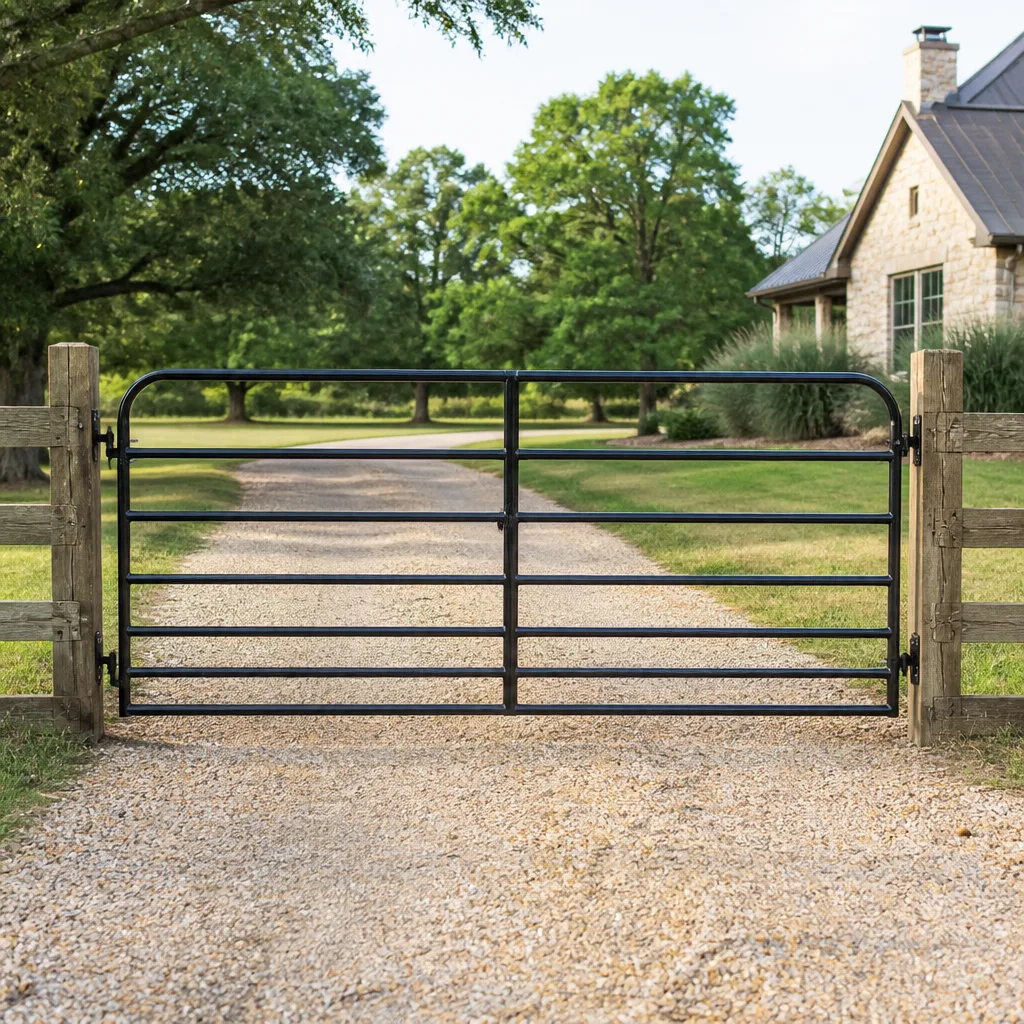

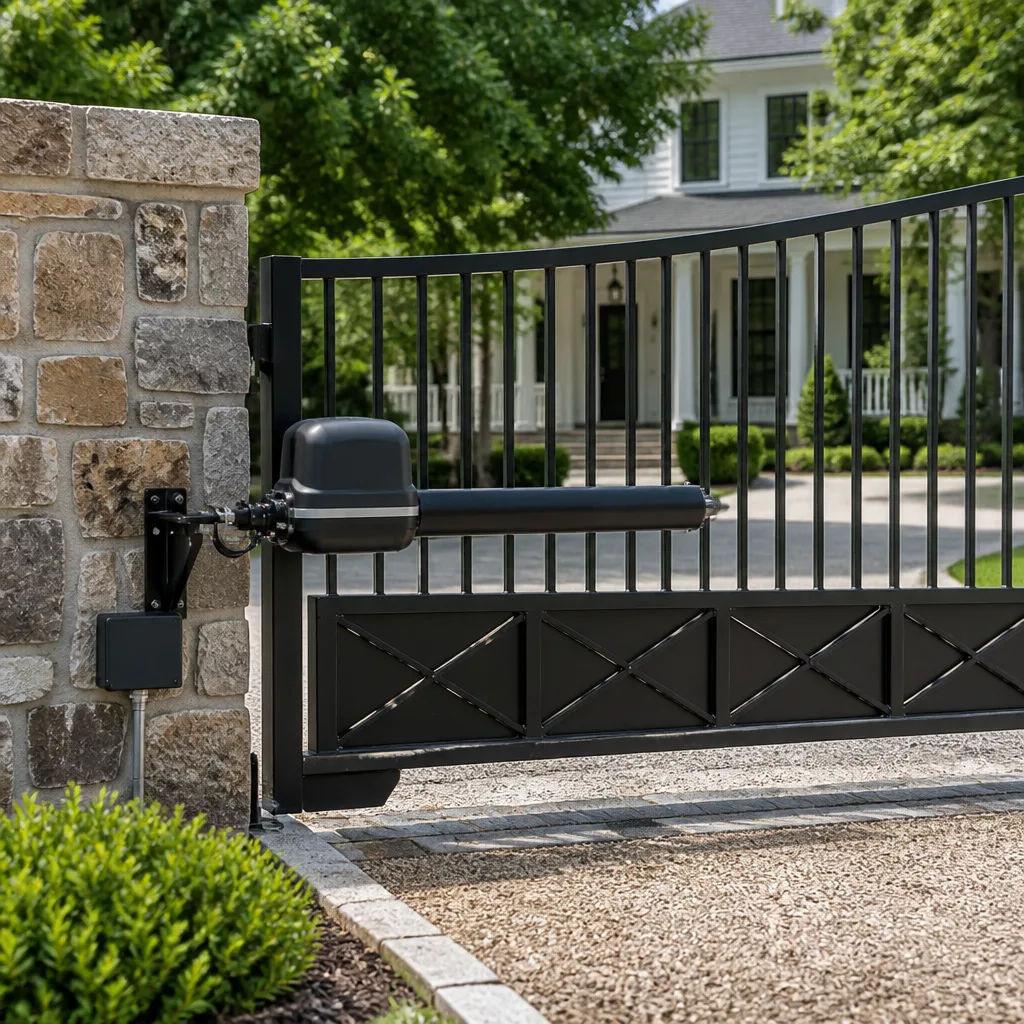
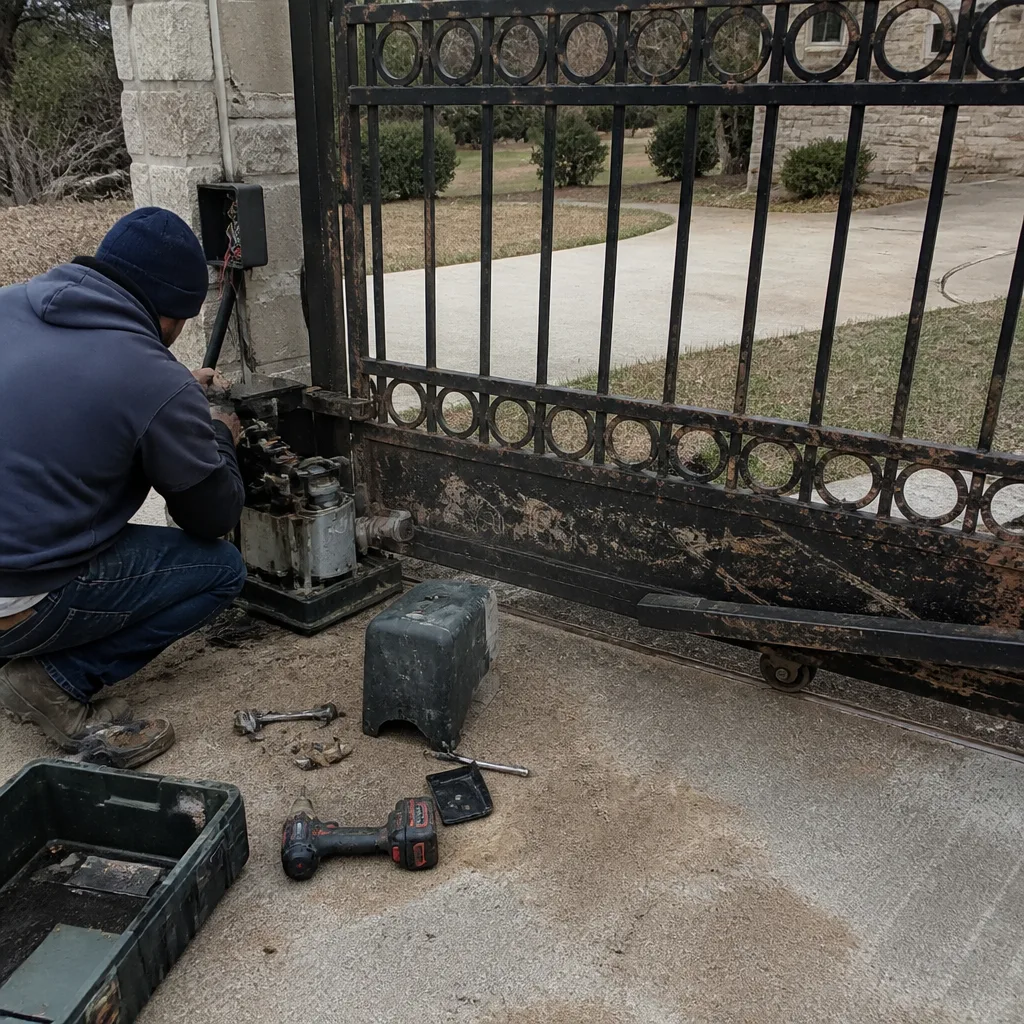 Before
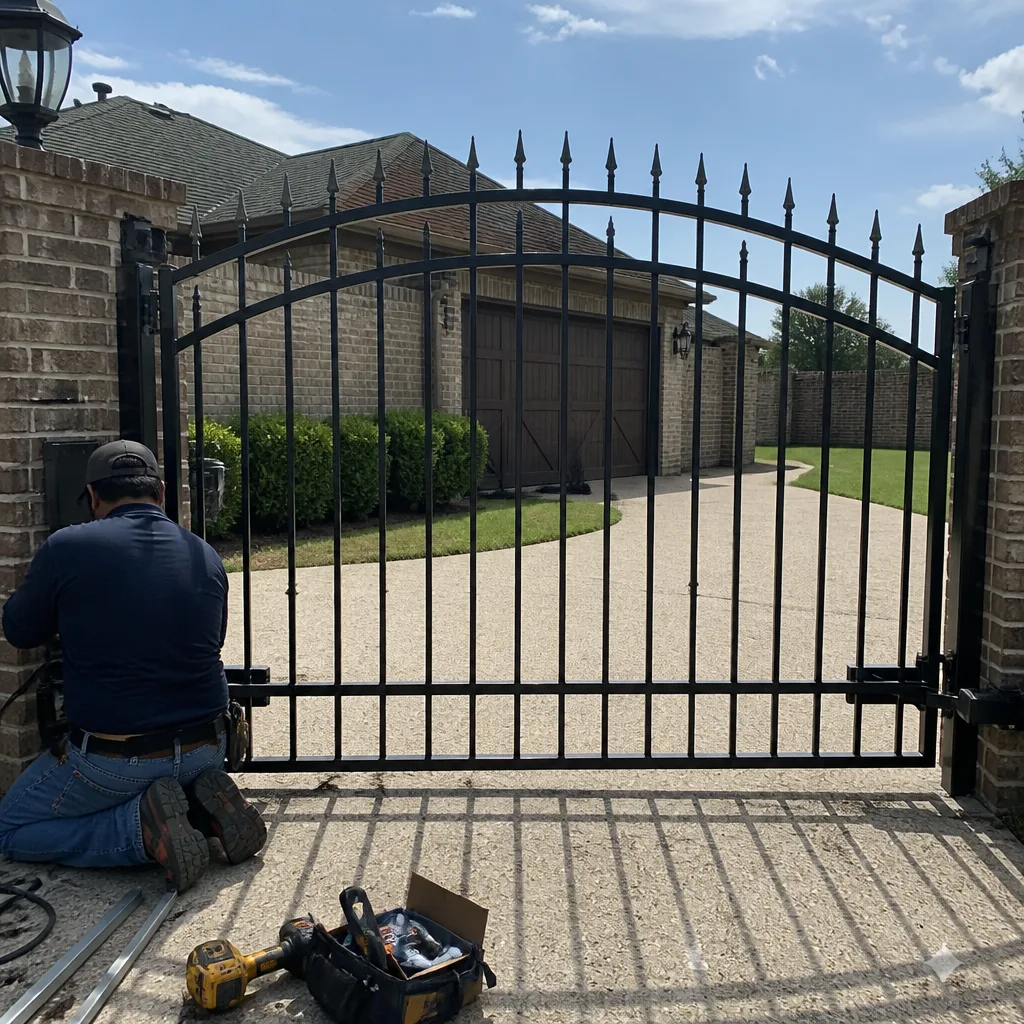 After
After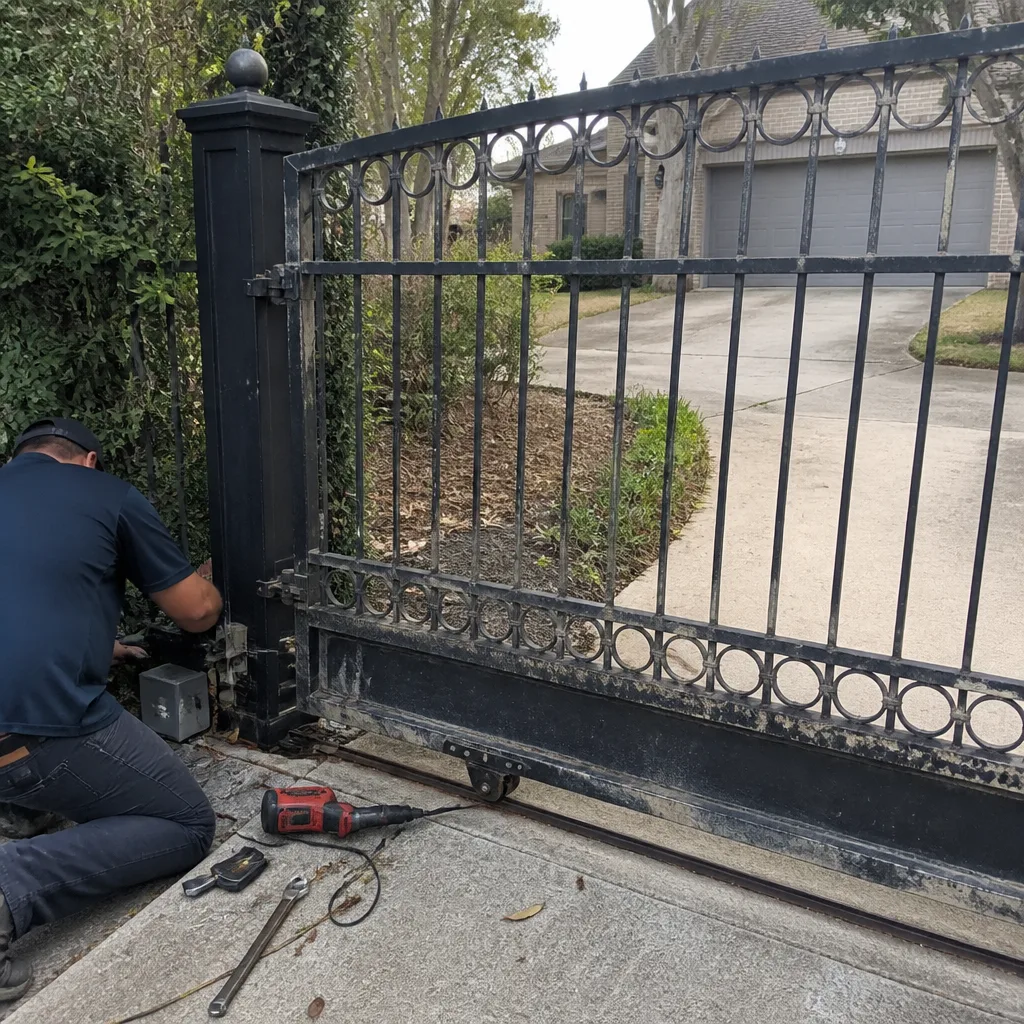 Before
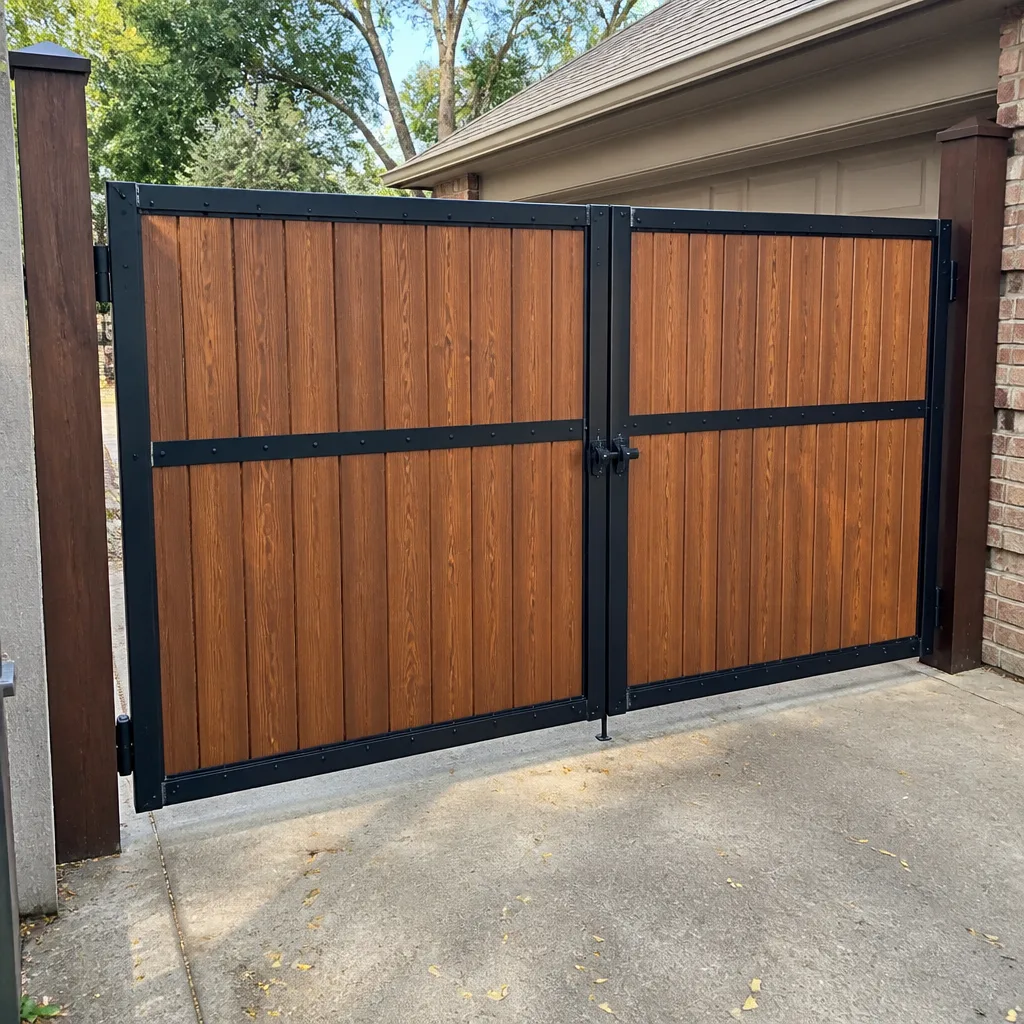 After
After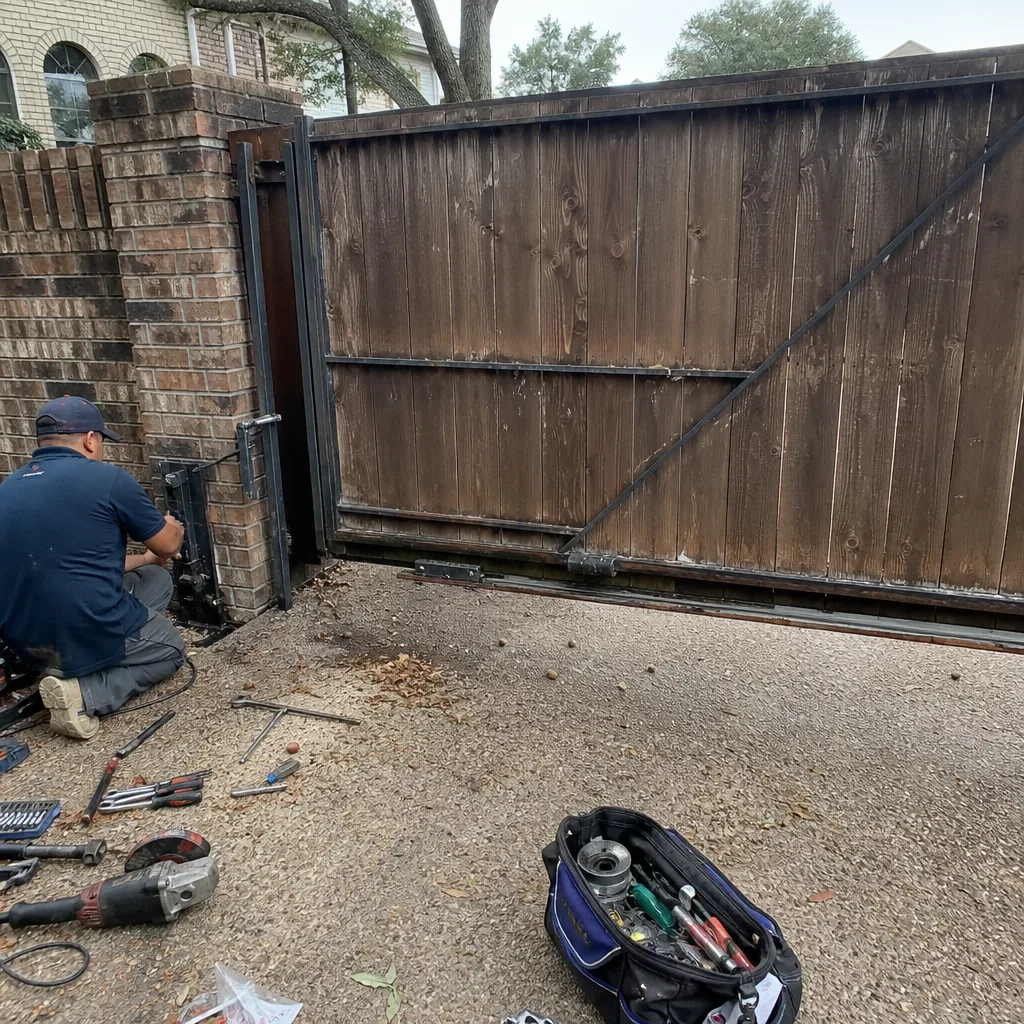 Before
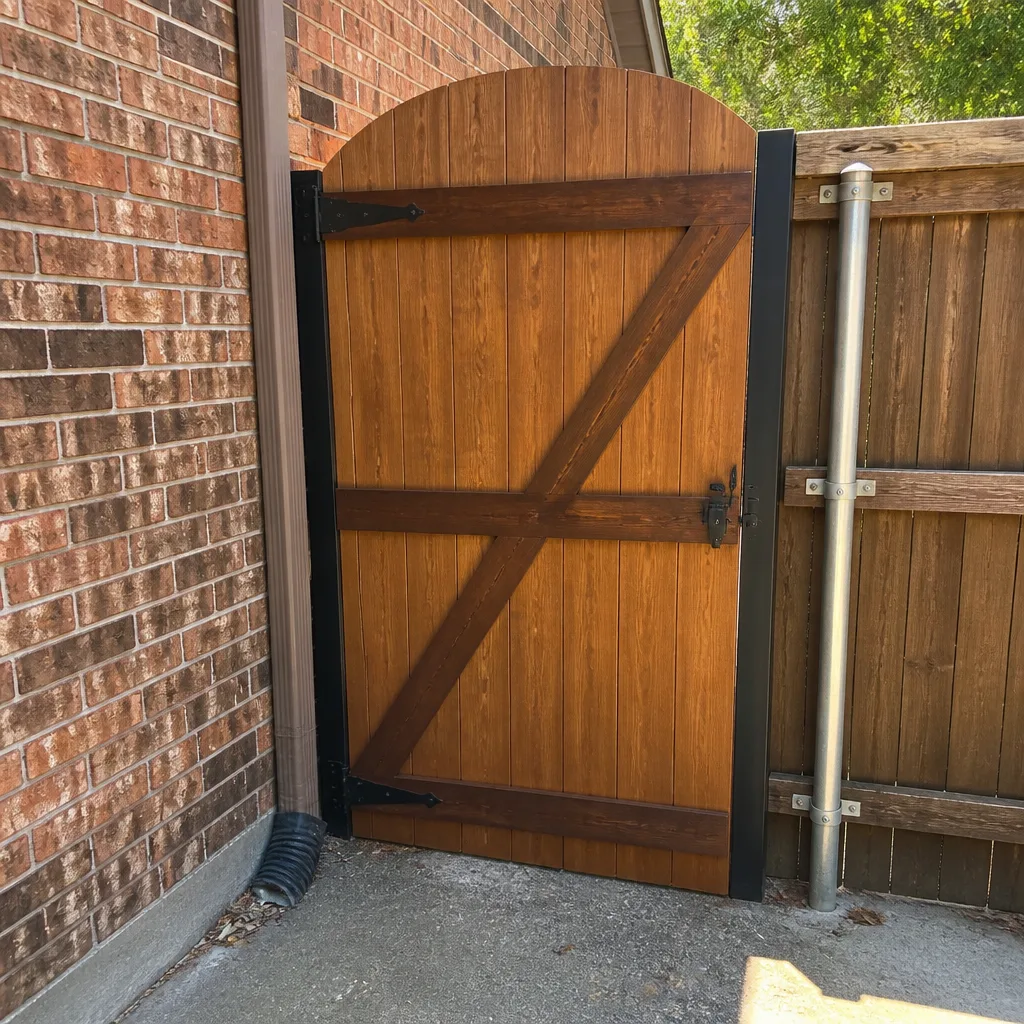 After
AfterGate Repair Maintenance Checklist for Bedford Homeowners
Here’s a number that should trouble every Bedford homeowner with a driveway gate: most of the gates we repair have failed at least once before, and the homeowner can’t tell us what was done the first time. Not the part number, not the adjustment, not even which company came out. The repair was made, the check was written, and the knowledge walked out the driveway. In Bedford specifically, where caliche dust and expansive clay soil work against gate hardware year-round, a maintenance routine that doesn’t leave a written record is just a schedule for paying twice. You’re about to learn how to inspect, document, and maintain a residential gate the way commercial access-control technicians do it, with a logbook that puts a baseline under every future gate repair.
Quick Answer
A useful Bedford gate maintenance checklist records measurements, not just completed tasks. Twice a year, you should log limit-switch positions, chain or belt tension, hinge gap width, and photo-eye alignment, then photograph each point so any future technician has a baseline. The tasks you can safely do yourself are cleaning, lubrication, and visual inspection; anything involving tensioned springs, torsion, or wiring terminals should be done by a technician with stored-energy lockout training. Vance Gate Repair Bedford provides a documented photo record on every visit, which means a professional inspection leaves you with exactly the kind of baseline this guide and our Gate Repair Warning Signs: A Bedford Homeowner’s Reference Guide describe.
Table of Contents
- Why a Checklist Without Records Fails
- What a Homeowner Can Safely Do vs. What Needs a Technician
- Bedford-Specific Conditions to Inspect For
- How to Structure a Gate Maintenance Logbook Entry
- Frequency Guidance Based on Duty Cycle, Not Just Months
- Which Measurements to Record as a Baseline
- Seasonal Maintenance Checklist for Bedford Gates
- Common Mistakes to Avoid
- When to Call a Professional
- Frequently Asked Questions
- The Bottom Line
BeforeAfterWhy a Checklist Without Records Fails
Every Bedford homeowner who has paid to diagnose a gate problem a second time had one thing in common: no written record of the first inspection. They knew the gate made a grinding noise last spring, but they couldn’t say whether the technician adjusted the limit switch or replaced a wheel. They remembered the motor was “looked at” two years ago, but not whether the chain was tightened or the capacitor was tested. When the same symptom returns, the new technician starts from zero, and the homeowner pays for diagnosis that was already done once.
A checklist you check off in your head is not a checklist. It’s a memory, and memory degrades. What makes a maintenance routine valuable is the record it produces: a dated entry showing what was inspected, what was found, what was done, and what the condition was when you finished. That’s the difference between a private habit and an asset. In commercial access-control work, this is standard practice. Every commercial gate site has a service log because the facility manager needs to prove the gate was inspected if there’s an incident. Residential homeowners rarely get the same discipline, and they pay for it.
Our recommendation for Bedford homeowners is simple: keep a bound notebook or a notes file on your phone, and treat each maintenance session as a documentation event, not just a task list. Write down the date, the outdoor temperature (expansion and contraction matter with metal gates), and at least three measurements. Photograph each measurement point with your phone. If you call Vance Gate Repair Bedford home, hand the log to the technician, and the diagnosis starts from your last entry instead of from scratch.
What a Homeowner Can Safely Do vs. What Needs a Technician
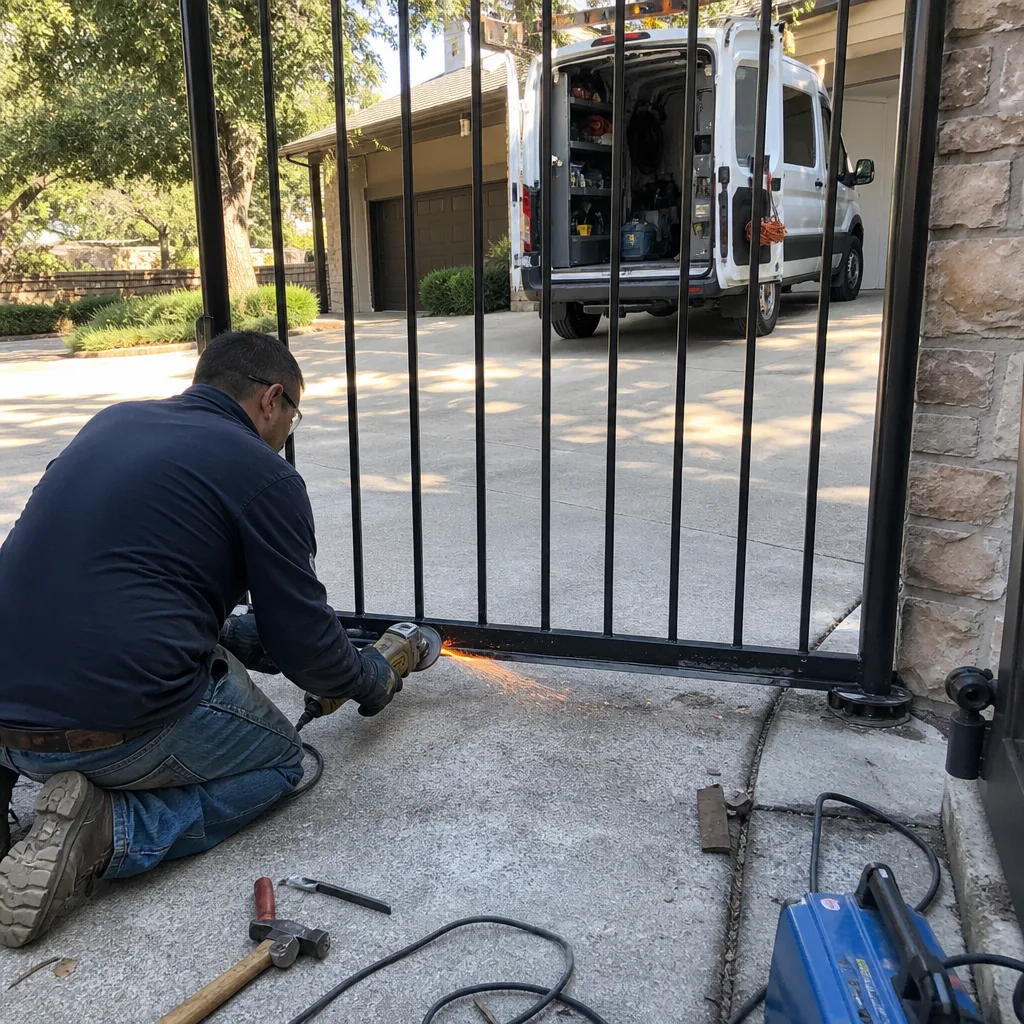
There is a hard line in gate maintenance, and it’s the line between observation and adjustment. Observing is safe. Adjusting a component under tension is not. A swing gate weighs hundreds of pounds. A sliding gate rides on steel wheels and a chain under load. A gate motor contains a capacitor that holds a charge even when the breaker is off. Crossing the line without training turns a maintenance checklist into an injury report.
Here’s what a Bedford homeowner can safely do:
- Wipe caliche dust off the motor housing, control board cover, and photo-eye lenses with a dry microfiber cloth.
- Lubricate hinge pins and gate wheels with a lithium-based or silicone spray, not WD-40.
- Inspect the gate track for debris, pebbles, or soil buildup, and clear it by hand with the motor breaker off.
- Check that the gate does not drift after it closes, and note the position if it does.
- Photograph the limit-switch cams, chain tensioner, and hinge gaps from the same angle each time.
- Log every observation in the logbook described below.
Here’s what requires a technician, no exceptions:
- Adjusting any spring tension, including the torsion springs on some swing gates.
- Resetting limit switches or changing motor travel limits.
- Re-tensioning a drive chain or belt.
- Opening the control board housing to inspect wiring terminals.
- Any work involving the capacitor or power supply, even with the breaker off.
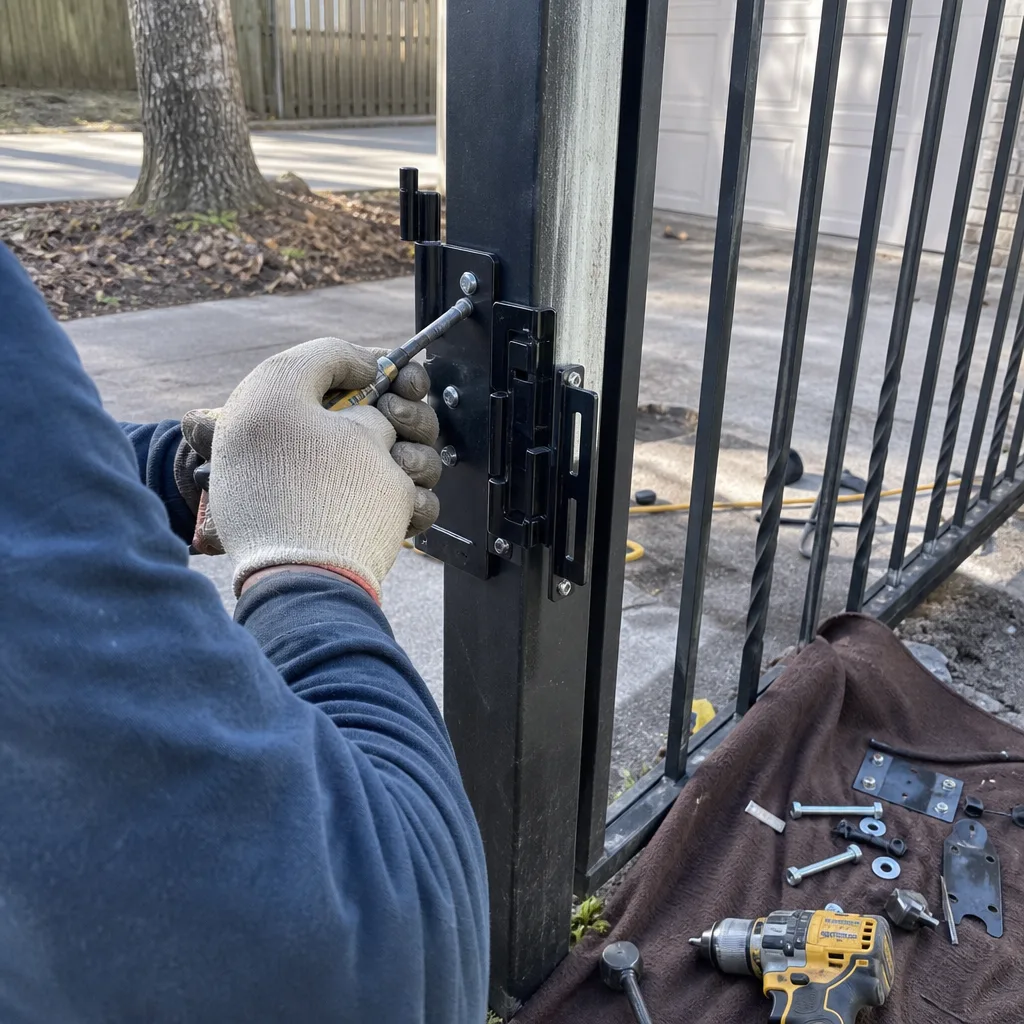
- Replacing wheels, rollers, or hinge bearings under load.
We’ve seen gates in Bedford where a homeowner loosened the wrong bolt and sent a 600-pound gate leaf off its hinges. The homeowner was fine, but the gate wasn’t, and the repair cost more than the maintenance would have. If the task involves a wrench on anything that’s holding weight or a screwdriver on anything with a wire, the checklist item is “call a technician,” not “try it.” For a professional look at anything on your gate, you can book with Gate Repair in Bedford and get a written price before any work starts.
Bedford-Specific Conditions to Inspect For
Bedford sits on the Eastern Cross Timbers, and the soil here is what a geotech would call expansive. It swells when it rains and shrinks when it’s dry, which means gate posts move. A gate that worked perfectly in March can bind in August because the post shifted a quarter inch. A gate that closed flush in October can catch in May after a wet spring. Maintenance in Bedford means checking for post movement before you check anything else.
The second Bedford-specific condition is caliche dust. It’s a fine, chalky, alkaline powder that gets into everything, and it’s death on gate motors. It cakes on the control board, works into the limit-switch mechanisms, and clogs the motor vent holes. If your gate is on a limestone driveway or you see white dust settling on surfaces near the gate, expect it in the motor housing too.
The third condition is UV degradation. Bedford’s summer sun is hard on plastic covers, wiring insulation, and control board housings. Covers get brittle, fade, and crack. Wiring insulation can dry and split after five to seven years of full sun exposure. A gate motor that fails in Bedford in September often looks fine from the outside and is cooked on the inside.
Here’s the inspection sequence we recommend for each maintenance session, tailored to Bedford conditions:
- Check the gap between the gate post and the gate leaf on both the hinge side and latch side. Log the measurement. Compare it to your previous entry.
- Look at the ground around the posts for cracks or gaps between soil and concrete. Fresh cracks mean recent movement.
- Open the motor housing cover (breaker off, hands off internal wiring) and look for caliche dust accumulation. Photograph whatever you find.
- Inspect all plastic covers, wire nuts, and insulation for UV brittleness. Pinch a wire insulator gently; if it cracks, note it.
- Log the date, temperature, and all observations in the logbook format below.
For a full list of what to look for on a Bedford gate, a professional maintenance visit from Vance Gate Repair Bedford covers all of the above with a documented photo record you get to keep.
How to Structure a Gate Maintenance Logbook Entry
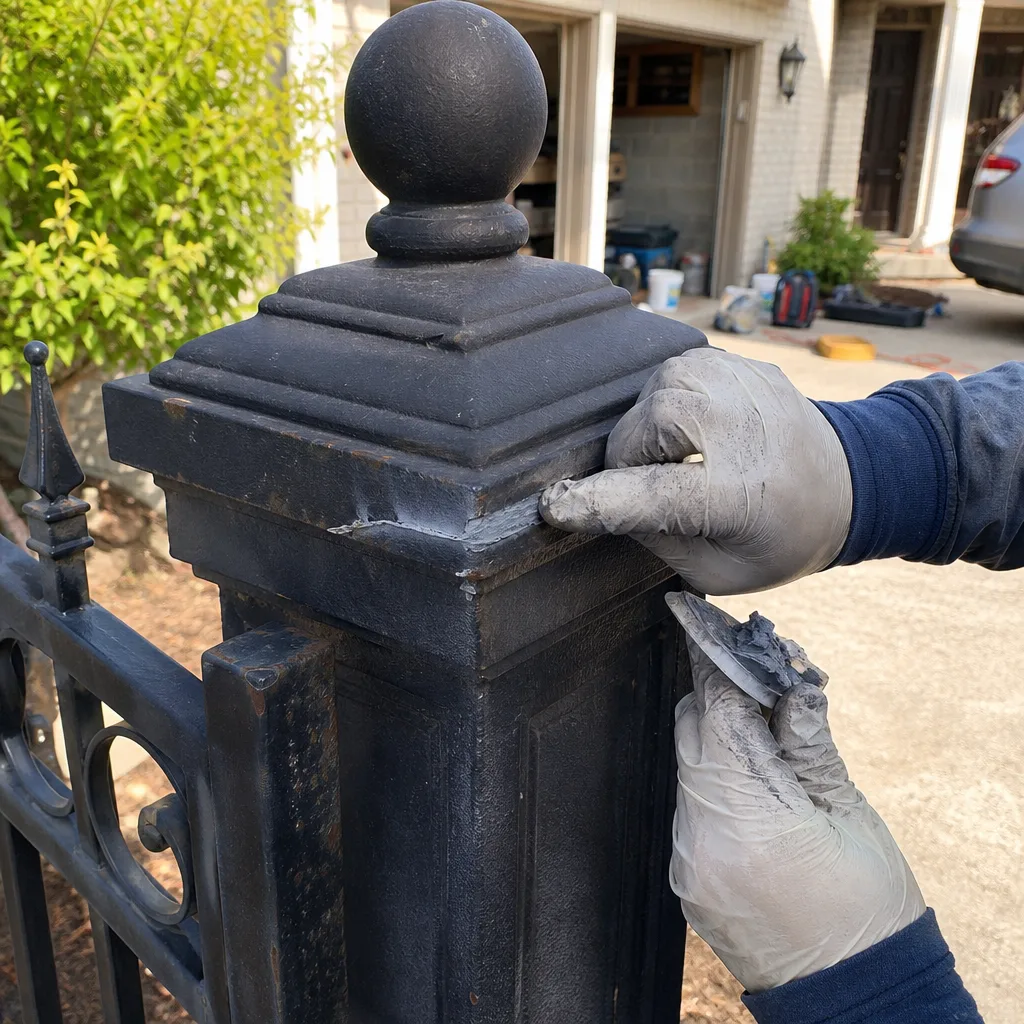
This is the section that separates a useful checklist from a list of chores. The logbook format we use, and the one we recommend to Bedford homeowners, mirrors the documentation standard Adrian Vance developed on commercial access-control sites starting in 2014. Four fields, every time, in this order: date, condition found, action taken, condition left. That’s it. The structure is what makes it useful.
Here’s a sample entry from a real Bedford gate we inspected:
Date: April 12, 2026
Temperature: 78°F
Condition found: Hinge-side post gap measured 3/8 inch, up from 1/4 inch in October. Chain tension slack measured 1-1/4 inch deflection at mid-span. Photo-eye lenses covered in caliche dust. Gate drifts 2 inches after closing.
Action taken: Cleaned photo-eye lenses. Logged drift measurement. No adjustments made. Called technician for chain and drift.
Condition left: Lenses clean. Chain tension unchanged. Drift unchanged. Awaiting service.
Notice what that entry does. It gives the next technician a baseline: the chain had 1-1/4 inch of slack on April 12. If the technician arrives June 3 and the chain has 2 inches of slack, the problem is accelerating. If the post gap was 3/8 inch in April and 1/2 inch in June, the post is moving. Without the measurements, the technician starts from “the chain looks loose,” which means he doesn’t know if it’s been loose for a week or a year.
Keep the logbook simple. A hardbound notebook works. A notes app works if you include photos. Don’t overthink it. The discipline is the format: four fields, every time, no exceptions. A homeowner who keeps this log for two years walks into any repair conversation with more information than 95 percent of the clients we meet.
Frequency Guidance Based on Duty Cycle, Not Just Months
Most maintenance guides tell you to inspect your gate twice a year. That’s not wrong, but it’s incomplete. The real driver of gate wear is duty cycle, which is a commercial-access-control term for how many open and close cycles a gate performs per day. A gate that opens eight times a day (four cars in, four out) wears very differently than a gate that opens forty times a day because you have a teenager, a lawn crew, and frequent deliveries.
Here’s our frequency guidance for Bedford gates, based on cycles per day:
- Low duty cycle (under 10 cycles per day): Full inspection and logbook entry twice a year. Lubrication twice a year. That covers most single-family homes where the gate is opened for a car a few times daily.
- Moderate duty cycle (10 to 25 cycles per day): Quarterly inspections. Monthly visual checks of hinge gaps, track debris, and photo-eye cleanliness. Lubrication every three months.
- High duty cycle (25+ cycles per day): Monthly inspections. This is the range for homes with multiple drivers, home-based businesses, or long driveways with frequent package deliveries. At this range, chain and wheel wear accelerate noticeably, and a quarterly schedule misses problems while they’re cheap to fix.
To find your duty cycle, count the total gate movements in one day. A full open and close counts as one cycle. If you’re not sure, take a week’s average. The number matters more than the calendar. A gate in Bedford that cycles thirty times a day in August heat needs more attention than the same gate cycling ten times a day in February.
One more Bedford-specific variable: extreme heat. August temperatures above 100°F soften plastic components, increase motor operating temperatures, and accelerate UV damage on exposed wiring. If your gate is a high-duty-cycle gate, add an extra inspection in August even if you just checked it in July. The heat changes how everything behaves.
If you’re not comfortable assessing duty cycle yourself or you’ve inherited a gate with no service history, contact Vance Gate Repair Bedford for a base inspection. We’ll establish the baseline and tell you honestly what your gate’s schedule should look like, without steering you toward a replacement you don’t need.
Which Measurements to Record as a Baseline
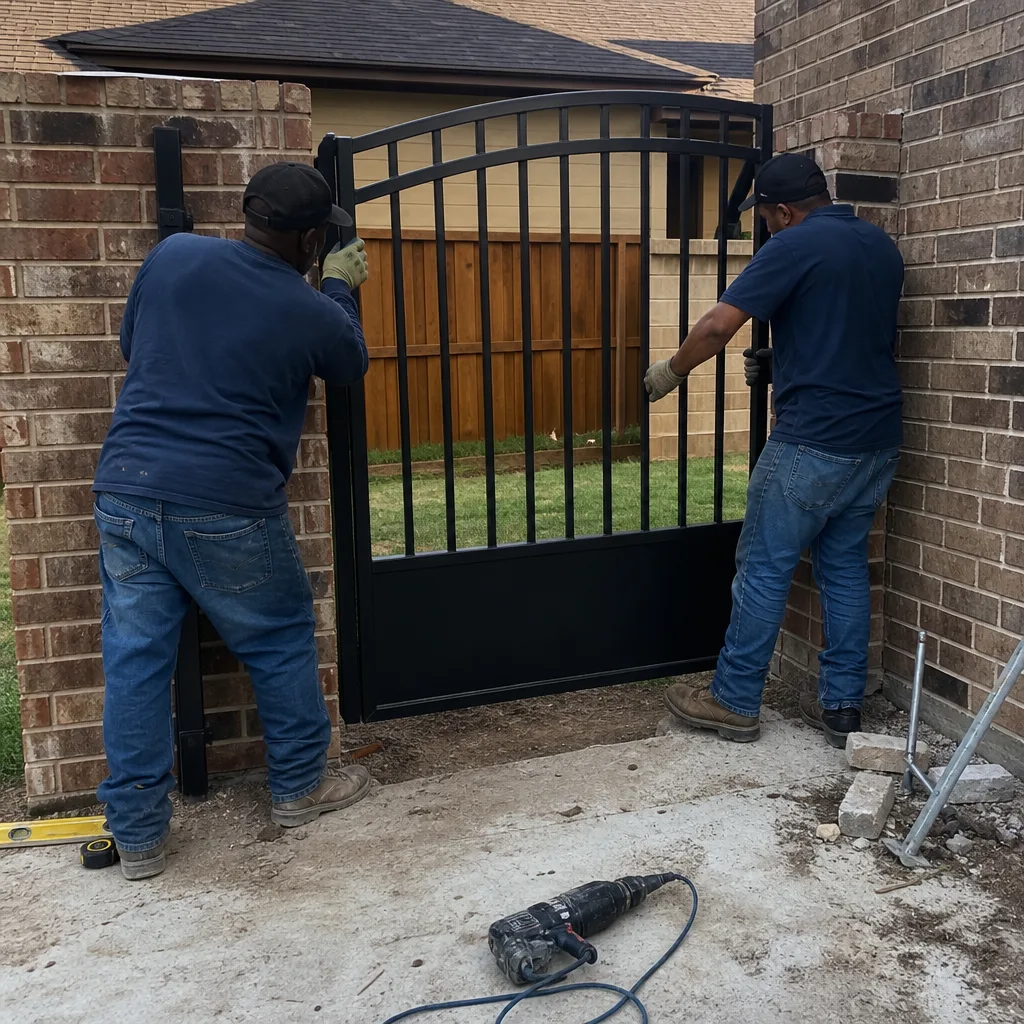
A measurement is only useful if you record it. The point of measuring is not to admire the number; it’s to compare it to the number you’ll get next time. Here are the specific measurements we recommend Bedford homeowners record at each inspection, along with what they tell you:
Hinge gap width. Measure the gap between the post and the gate leaf at the top and bottom of each hinge. Use a ruler or a caliper if you have one. Record both numbers. A difference between top and bottom means the gate leaf is sagging. A change over time means the post is moving or the hinge is wearing. In Bedford’s expansive clay soil, post movement shows up here first.
Chain or belt tension. For sliding gates with a chain drive, measure the deflection at the midpoint of the chain between the motor sprocket and the gate. Press down with your finger; measure how far the chain moves. A deflection over 1-1/2 inches on most residential chains means the chain needs tensioning. Record the exact number, not “looks loose.”
Limit-switch positions. Photograph the limit-switch cams or travel stops from directly above and from the side. Don’t adjust them; just photograph them. If the gate starts stopping short or overshooting, and you have a photo of the original position, your technician can compare and know exactly what moved. The photo is the record.
Gate drift distance. After the gate closes, measure any gap between the gate edge and the closed stop. A gate that closes flush in March but drifts two inches in August has a limit-switch issue or a clutch problem. A gate that drifts inconsistently may have a motor issue. Record the exact gap each time.
Photo-eye alignment. Wipe the lenses and visually check that the two photo-eye units face each other squarely. If you have a level, place it on top of each unit and photograph the reading. A misaligned photo-eye is the most common cause of a gate that reverses for no reason.
These five measurements take less than ten minutes once you know where to look. In our experience, they catch 80 percent of the problems that lead to emergency calls. The homeowner who can hand a technician a logbook with these numbers skips the diagnostic phase and goes straight to the fix.
Seasonal Maintenance Checklist for Bedford Gates
Here’s the full checklist, season by season, with the Bedford-specific item highlighted for each. Print it or copy it into your logbook. Check off each item and log the results.
Spring (March to May):
- Inspect posts for movement after winter rain. Log hinge gap width at all hinges.
- Clean caliche dust from motor housing, photo-eye lenses, and control board cover.
- Lubricate hinge pins and gate wheels after the wet season.
- Check chain or belt tension. Log the deflection measurement.
- Test the gate’s full open and close cycle. Log any drift, noise, or hesitation.
- Photograph limit-switch positions from a fixed angle.
Summer (June to August):
- Inspect all plastic covers, wire insulation, and the control board housing for UV brittleness.
- Check motor housing for overheating signs: discoloration, warped plastic, or a burnt smell.
- Clear debris from the gate track and ensure wheels are rolling, not skidding.
- Inspect for ant colonies or spider webs inside the motor housing; both are common in Bedford summers.
- If your gate is high duty cycle, perform a full mid-summer inspection.
Fall (September to November):
- Check posts again after summer soil shrinkage. Compare hinge gaps to your spring measurements.
- Test the gate motor under load; fall is when weak capacitors and worn clutches start to show.
- Lubricate before the cooler, damper weather sets in.
- Log all measurements. This is your baseline for winter comparison.
- Check that the photo-eye lenses are clean and aligned before shorter daylight hours reduce visibility.
Winter (December to February):
- Inspect metal gate panels for surface rust at weld points and touch up with rust inhibitor.
- Check that the gate does not stick after cold nights; metal contracts slightly and can affect latch alignment.
- Verify the motor capacitor terminals are dry, especially after heavy winter rain.
- Test the battery backup if your gate has one; cold weather shortens battery effectiveness.
- Log everything and compare full-year measurements for trends.
If any line item turns up something you don’t want to adjust yourself, or you simply want a professional eye at any point in the cycle, Vance Gate Repair Bedford offers written estimates before any work starts, with a documented photo record included on every visit.
Common Mistakes to Avoid
- Skipping the logbook entry because you “didn’t find anything.” A null finding is still a finding. If you inspected and everything looked fine, that’s a data point. Write it down.
- Using WD-40 on gate hinges or chains. WD-40 is a cleaner and a water displacer; it’s not a long-term lubricant. It attracts dust and evaporates. Use a lithium-based grease or a silicone spray, and wipe off the excess.
- Ignoring gate drift because “it still closes all the way.” Drift is a symptom, and symptoms don’t fix themselves. Two inches of drift in April can become six inches by August, and then the gate starts reversing intermittently.
- Tightening bolts on a gate that’s under load. If the gate is holding its own weight and you loosen the wrong bolt, you release that energy unexpectedly. Always call a technician for any adjustment involving a gate leaf that isn’t fully supported.
- Assuming a Bedford gate that worked last year will work this year. Soil movement and UV damage are cumulative. The gate doesn’t know what month it is. It only knows what the conditions have done to it.
- Cleaning the photo-eye but not noticing it moved. Wiping the lens is not the same as checking alignment. A photo-eye that’s two millimeters off can cause phantom reversals. Log a level reading if you can.
- Calling a different company every time and not keeping their paperwork. Consistency of record matters. The fourth company you call is the one that’s going to ask you what the first three did, and if you can’t answer, you’re paying for diagnosis number four.
When to Call a Professional
Call a professional when the maintenance checklist turns up something you wouldn’t put a wrench on: gate drift that you’ve logged twice in a row, chain slack that’s increasing between inspections, a motor housing that’s too hot to touch after a cycle, or any crack in a post or weld. Call when the photo-eye won’t stay aligned and you’ve cleaned it twice. Call when the gate starts reversing mid-cycle and you can’t explain it from your logbook. In each of these cases, the logbook you’ve been keeping turns an hour of detective work into a ten-minute diagnosis. Vance Gate Repair Bedford offers free estimates for Bedford homeowners. Call (817) 572-8590 and describe what you’ve logged; we’ll give you a written price before any work begins.
Frequently Asked Questions
Maintenance frequency depends on how many cycles your gate runs per day, not just the calendar. Under 10 cycles daily, inspect twice a year. At 10 to 25 cycles daily, inspect quarterly. Above 25 cycles, inspect monthly. Bedford’s summer heat and caliche dust make the upper ranges more demanding than the lower ones. Call (817) 572-8590 for a duty-cycle assessment if you’re not sure where your gate falls.
A professional maintenance visit from a Bedford gate technician should include a full inspection of the motor, chain or belt, hinge gaps, photo-eyes, limit switches, and control board, followed by documented adjustments with before and after photos. At Vance Gate Repair Bedford, every maintenance visit includes a written record of what was found, what was set, and what was left, so you have a baseline for next time and clarity on Gate Repair Permits, Codes & Inspections in TX: What You Need to Know.
Basic gate maintenance in Bedford typically runs between $95 and $185 for a swing or sliding gate inspection and lubrication, depending on the gate size and the number of access points. If the visit turns up a repair, that repair is priced separately in writing before any work starts. Your price is always agreed in writing before anyone picks up a tool, in line with Haven Standard Clause 1.
Lubrication is a homeowner-safe task if you use the right product and keep clear of tension points. Use a lithium-based or silicone lubricant on hinge pins and wheels, never WD-40. Wipe off the excess to avoid attracting caliche dust. If you’re not sure which fittings are safe to reach, have a technician show you once and log the instructions for next time.
Bedford’s clay soil expands with spring rain and contracts in summer heat, which moves gate posts slightly. A gate that’s perfectly aligned in April can bind in August by a fraction of an inch. That’s why hinge gap measurements matter. If you’ve logged them, you’ll see the movement in the numbers instead of guessing whether the post has shifted or the hinge has worn.
No. Gates are mechanical, and mechanical things wear. A good maintenance checklist with documented measurements will catch most problems while they’re small and cheap to fix, and it will give any future technician the baseline they need to diagnose accurately. Bedford homeowners can expect to prevent emergency calls and repeated diagnostic fees, though occasional repairs remain part of owning a gate.
The Bottom Line
This checklist produces a record, and the record is the asset. Twice a year at minimum, you should be logging hinge gap widths, chain tension deflection, gate drift distance, and photo-eye alignment, along with the date and temperature. In Bedford, you should also be inspecting for caliche dust, UV degradation on plastic covers, and post movement from expanding clay soil. The tasks you can safely complete are cleaning, lubricating, and logging. Everything under tension or behind a wire goes to a technician. The logbook format is four fields: date, condition found, action taken, condition left. Keep it, photograph it, and hand it to whoever works on the gate next. The gate doesn’t forget what’s been done to it. Now you won’t either.
For a professional maintenance visit in Bedford with a documented photo record and a written price before any work begins, call (817) 572-8590 or book online with Vance Gate Repair Bedford home. Every visit leaves a record. That’s the point.
Written by Adrian Vance, Owner at Vance Gate Repair Bedford, serving Bedford since 2014. For more guides & resources, visit our blog.