
Last updated September 20, 2026
Free on-site gate assessment - hinges, posts, and your LiftMaster or Nice gate operator checked before anything is quoted
The assessment is free and the quote is the invoice.

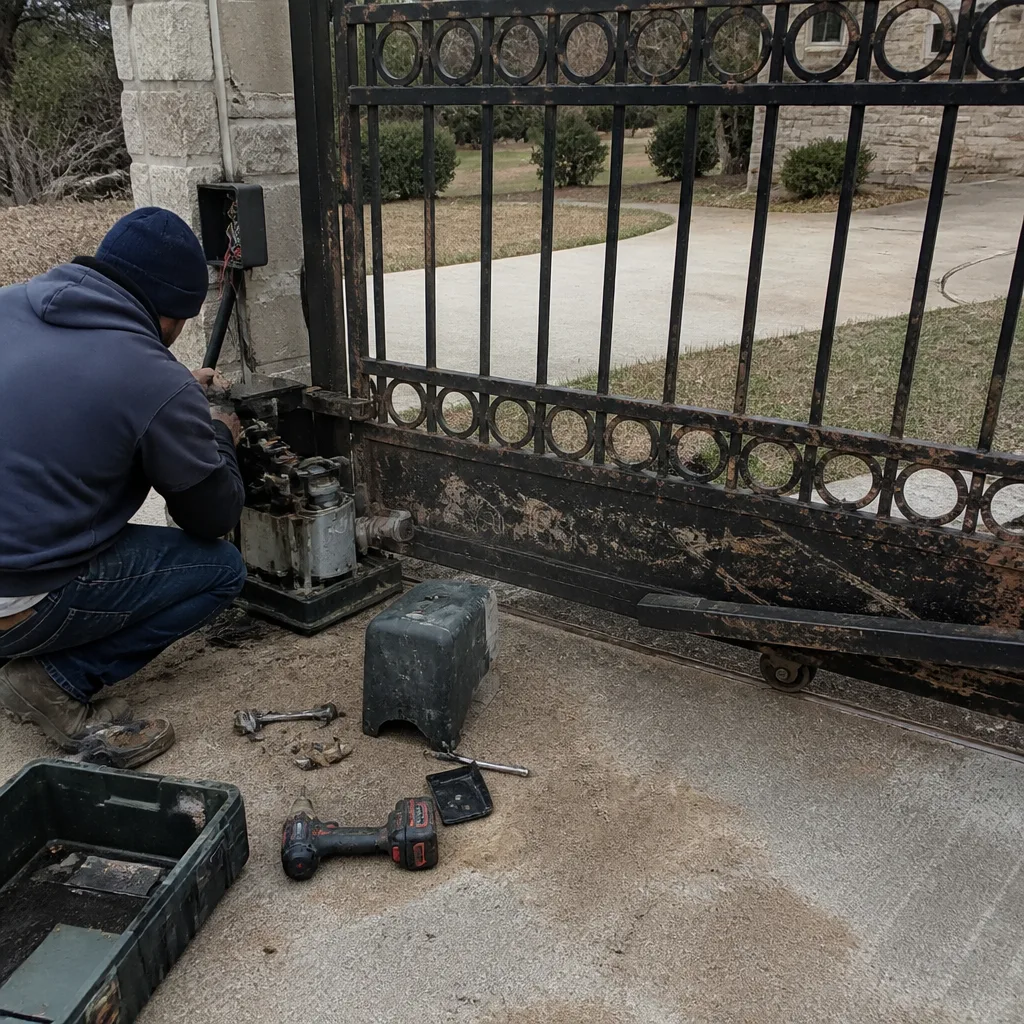 Before
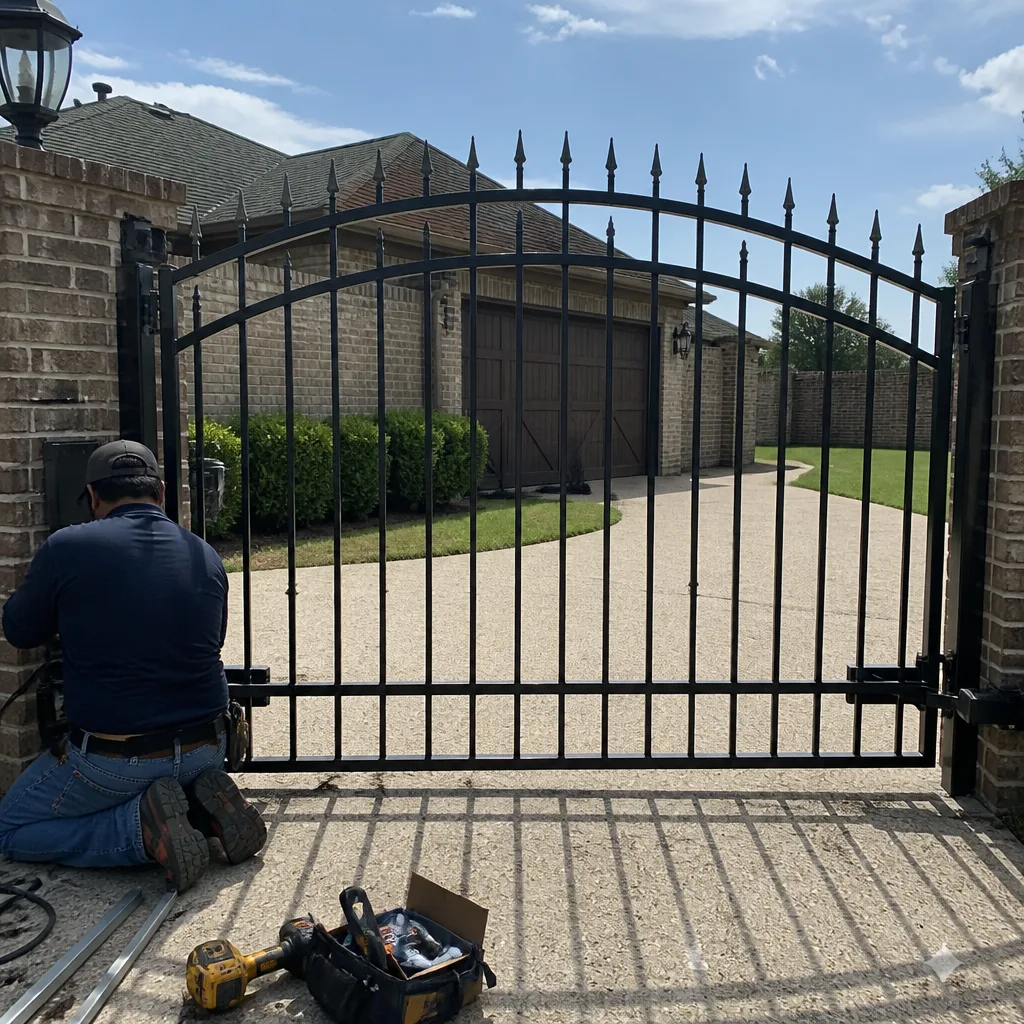 After
After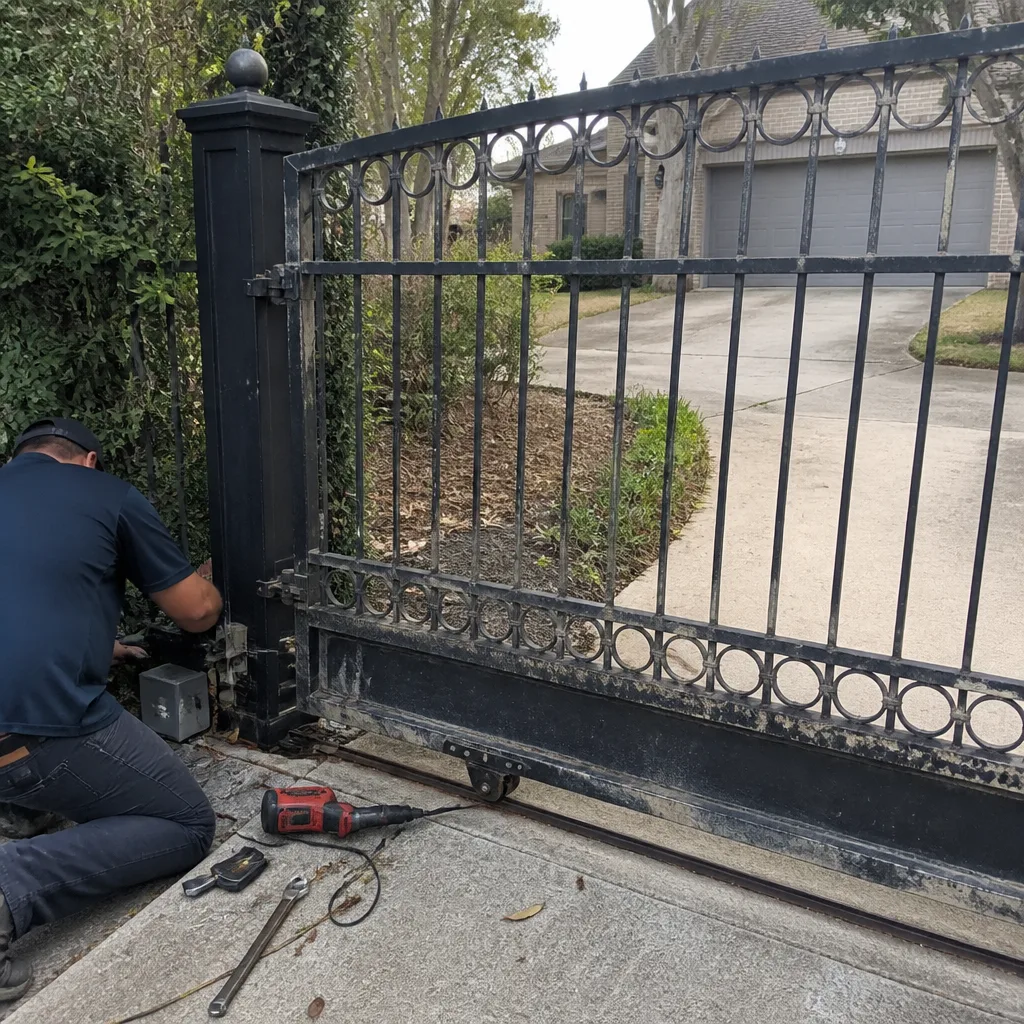 Before
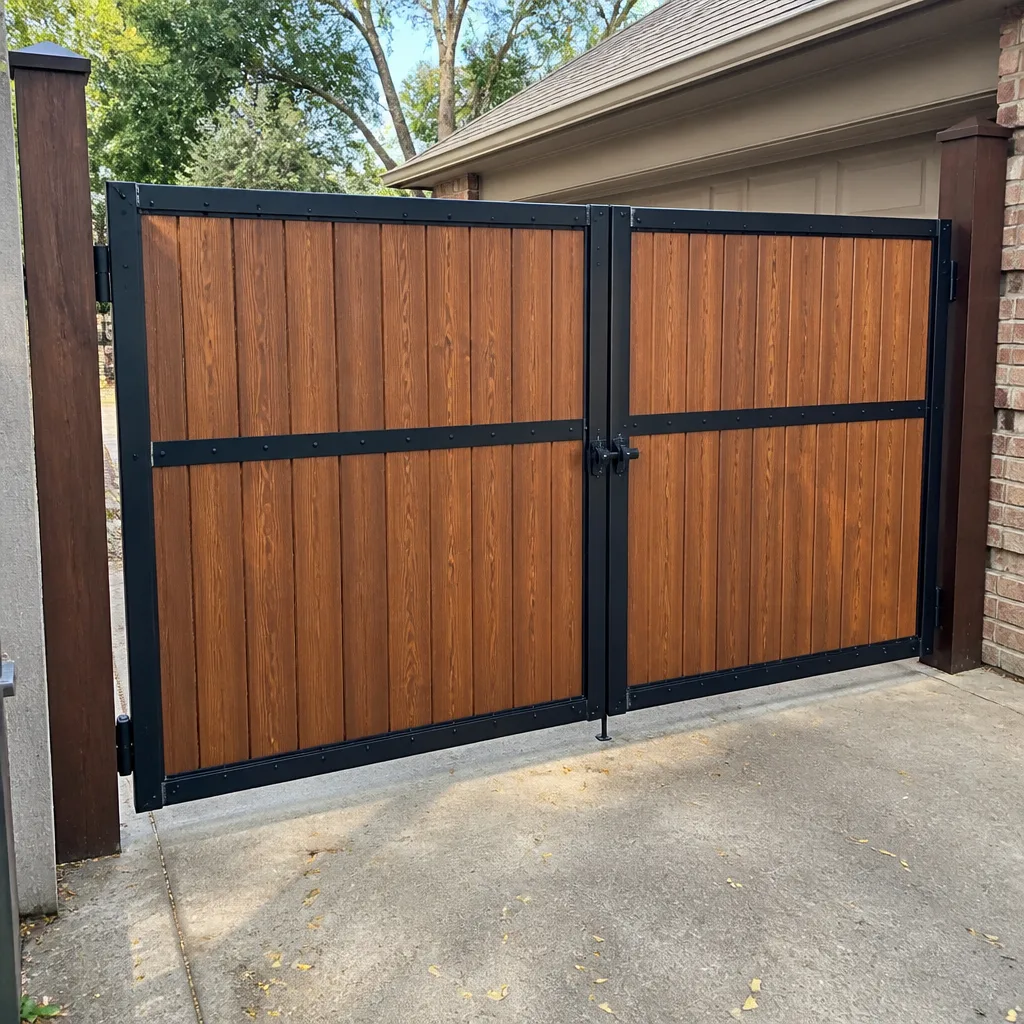 After
After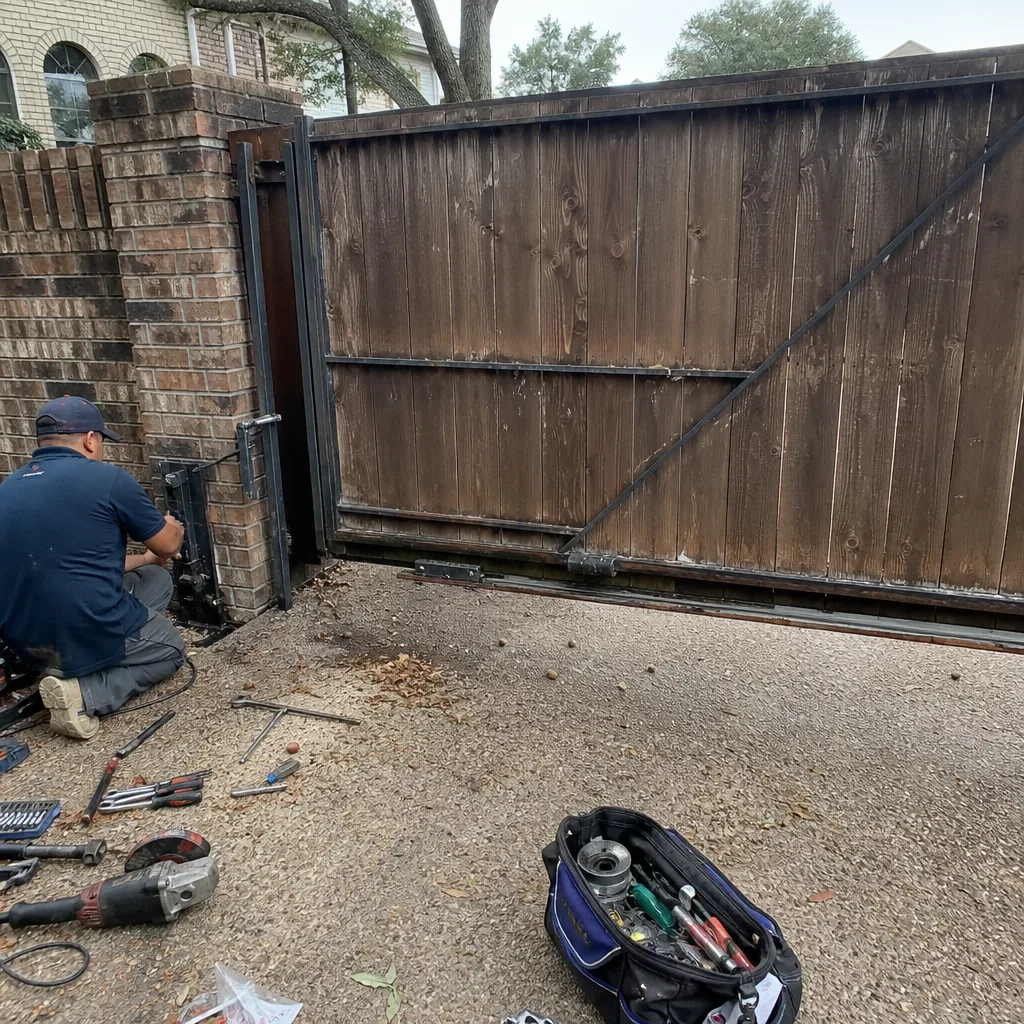 Before
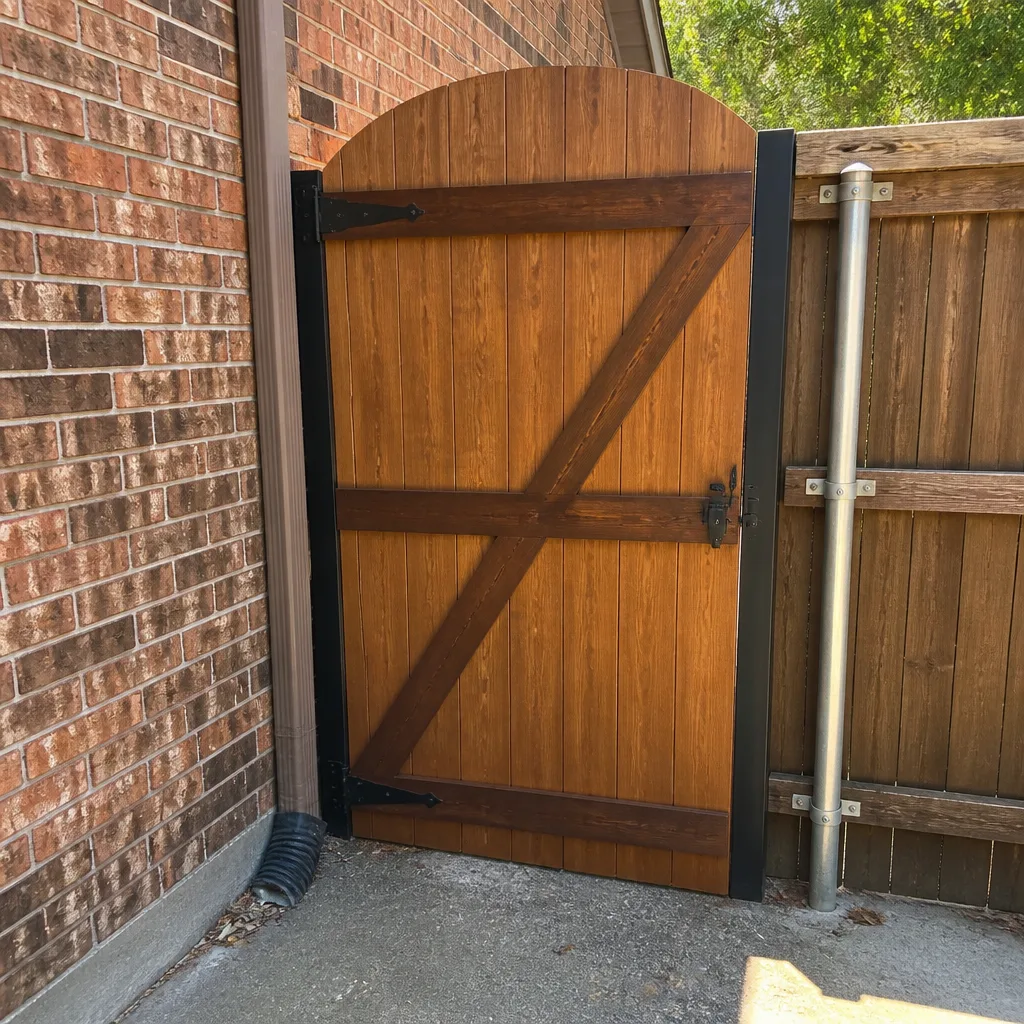 After
AfterSeasonal Gate Repair Care for Bedford: Year-Round Homeowner’s Guide
The gate failures Bedford technicians see most often in February aren’t from ice. They’re from the freeze-thaw cycle that moves clay soil two to three inches and throws a perfectly adjusted gate out of alignment overnight. A gate that opened smoothly in November suddenly drags across the driveway or won’t latch, and the homeowner assumes the motor failed. It didn’t. The ground underneath it moved. This guide-along with our Complete Guide to Gate Repair in Bedford-rebuilds the maintenance calendar around Bedford’s actual conditions: two heat cycles, a short ice window, and a spring soil-movement period that does more damage than any other season. You’ll learn what to check, when to check it, and how to document what you find so a small adjustment never becomes a $1,800 motor replacement.
Quick Answer
Seasonal gate maintenance in Bedford, TX means working around four real periods, not four calendar seasons: spring soil movement (February through April), summer heat load (May through September), fall re-alignment (October and November), and winter freeze prep (December and January). The single highest-impact task is checking post plumb and gate alignment each spring because Bedford’s expansive clay soil shifts posts enough to bind hinges and burn out motors. A homeowner who measures alignment twice a year, photographs it, and addresses small deviations promptly will avoid most repair calls entirely.
Table of Contents
- What Bedford’s Climate Actually Does to Gates
- Spring Soil Movement: The Season That Breaks Gates
- Summer Heat Load: Why Motors Trip and What to Do
- Fall Re-alignment: The Best Repair Window in Bedford
- Winter Prep: Lubricant Selection and Ice Damage Prevention
- How to Photograph and Document Gate Alignment Each Season
- Operator-Specific Notes: DoorKing, LiftMaster, Mighty Mule, Elite
- Common Mistakes to Avoid
- When to Call a Professional
- Frequently Asked Questions
- The Bottom Line
BeforeAfterWhat Bedford’s Climate Actually Does to Gates
Bedford sits on the Eastern Cross Timbers geological zone, and the soil here is predominantly Houston Black clay and Austin silty clay. If you’ve lived in Bedford for more than a year, you’ve seen what that clay does to sidewalks, driveways, and fence lines. It swells when wet and contracts when dry, and it can move a gate post enough to change the gap at the latch by half an inch in a single wet-dry cycle. Most national gate maintenance guides are written by companies in Arizona or California, where the ground stays put. Those guides tell you to lubricate hinges in spring and check the battery in fall. They miss the actual mechanism of failure in North Texas: soil movement, not component wear, is the leading cause of gate binding and motor failure in Bedford.
The second factor most guides miss is the shape of Bedford’s summer. It is not a season. It is a five-month thermal event. Sustained daytime highs above 95°F, overnight lows that never drop below 80°F for weeks at a time, and direct sun on a black steel gate that pushes surface temperatures past 150°F by 3:00 PM. That heat changes how operators behave. A motor rated for a 40% duty cycle at 77°F might only sustain 20% duty at 105°F ambient. The gate still works. It just works less, and it overheats faster, and the homeowner doesn’t know why the gate quit halfway open on a July afternoon.
The third factor is the ice window. Bedford gets one or two hard freezes most winters, usually in January, sometimes late December. The ice itself does less damage than what happens in the 48 hours after the thaw begins. Water that seeped into hinge barrels and bearing housings freezes, expands, and cracks seals. Then the thaw releases that water back into the mechanism, now with a clear path past the damaged seal. The damage shows up weeks later as rust streaks below hinge pins or a grinding sound in the operator arm joint.
Understanding these three factors is the foundation of everything else in this guide. When you know why a gate fails in Bedford, you know what to look for before it fails.
Spring Soil Movement: The Season That Breaks Gates
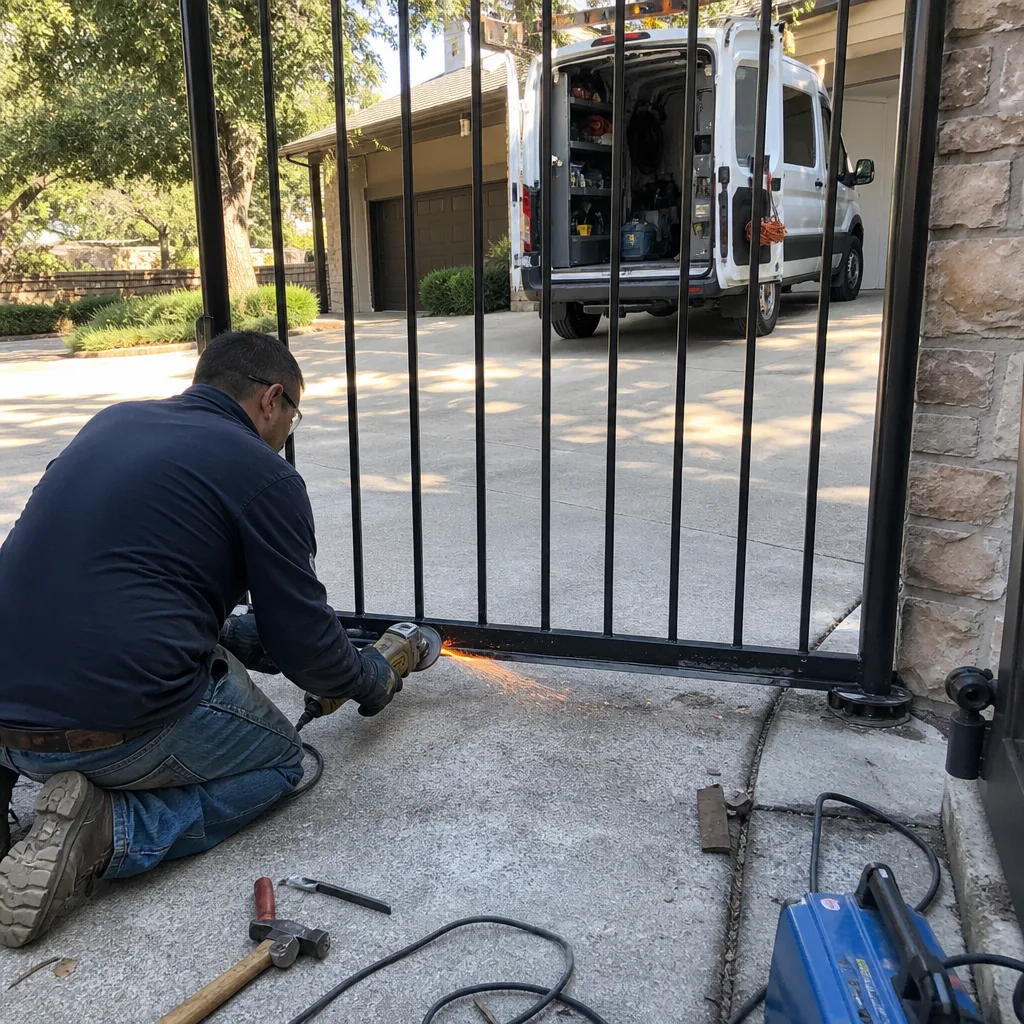
The most damaging period for Bedford gates is February through April. Spring rains saturate the clay. The clay expands. Gate posts move. In our experience providing Gate Repair services across Bedford, we see a measurable spike in binding-gate calls every March, and most of those gates were working fine in November. The homeowner assumes the gate “just wore out.” What actually happened is the post moved, the gate now drags, and the motor has been working against the added friction for weeks before the homeowner noticed anything.
Here is the spring checklist every Bedford homeowner should run in early March, then again in late April after the last heavy rain:
- Check post plumb. Place a 4-foot level vertically against the hinge post in two positions, 90 degrees apart. The bubble should sit within the center marks. If it’s outside the marks by more than 1/8 inch over 4 feet, the post has moved.
- Check gate level. With the gate closed, run a level along the top rail. A gate that was installed level and now reads off-level is usually hanging from a post that shifted.
- Check the latch gap. Open the gate halfway and look at the gap between the latch and the strike plate. If it’s noticeably tighter or wider than it was in the fall, you have soil movement.
- Check the hinge barrels. Look for bright metal or fresh wear marks where the hinge pin meets the barrel. New wear means the gate is now loading the hinge differently than it was designed to.
- Listen to the motor. Run the gate through a full open-close cycle with the operator’s built-in control, not the remote. A motor that now labors or slows mid-cycle is working against added friction from misalignment.
What triggers a re-pour versus a simple hinge re-adjustment? The division is not arbitrary. If the post is out of plumb by 1/2 inch or more over its height, the footing has almost certainly shifted, and adjusting the hinge won’t hold because the post will keep moving with the next wet-dry cycle. A post that has moved 1/4 inch or less can often be corrected with hinge shims or a sag adjuster, assuming the post itself remains solid in the ground. The test is simple: grab the post with both hands and rock it hard. If you can feel movement, the footing is compromised. In Bedford clay, that almost always means the original footing was poured too shallow or too narrow for the soil conditions. A proper gate-post footing in expansive clay should extend below the active soil line, typically 30 to 36 inches, and be at least 12 inches in diameter for a 4×4 steel post supporting a heavy swing gate.
If you catch post movement early, the repair is measured in hundreds of dollars, not thousands. If you wait until the motor burns out from fighting a bound gate, you’re now paying for a hinge correction plus a motor replacement. That’s the difference between a documented seasonal inspection and a surprise invoice. At Gate Repair in Bedford, we write up what we find and hand you the price before anything gets touched.
Summer Heat Load: Why Motors Trip and What to Do
Every gate operator has a duty cycle rating, which is the percentage of time the motor can run versus rest before it overheats. A typical residential swing-gate operator from LiftMaster or Mighty Mule carries a 20% to 40% duty rating, depending on the model. That rating assumes an ambient temperature around 77°F. The rating does not hold at 105°F, and it definitely doesn’t hold at 105°F with direct sun cooking the control box. In Bedford summers, a 40% duty motor effectively becomes a 15% or 20% duty motor.
Thermal cutout is a protective circuit inside the motor that shuts the motor down when its windings reach a set temperature. When thermal cutout trips, the gate stops moving and won’t respond to the remote for anywhere from 10 minutes to an hour. The homeowner’s natural response is to assume the operator failed. It didn’t fail. It protected itself. The problem is that repeated thermal trips degrade the winding insulation over time, and a motor that trips regularly in July will eventually fail permanently in September.
How to identify thermal cutout trips before the motor burns:
- Time the gate. A gate that takes 14 seconds to open in May should take 14 seconds in July. If it’s taking 18 or 20 seconds, the motor is laboring and running longer per cycle, which builds heat faster.
- Feel the motor housing. After a normal open-close cycle, place the back of your hand on the motor housing. If you can’t keep it there for five seconds, the motor is running hotter than it should.
- Count consecutive cycles. Run the gate open and closed three times in a row in the late afternoon heat. A healthy operator should complete all three. A heat-stressed operator will slow noticeably or stop on the third cycle.
- Check for shade loss. If a tree or shrub that used to shade the operator has died or been removed, the control box is now taking full western sun. That alone can push a marginal operator into regular thermal trips.
What can you actually do about summer heat? First, keep the operator’s cooling vents clean. Dust, grass clippings, and spider webs block airflow and raise internal temperatures by 20 degrees or more on a hot day. Second, consider a simple shade panel for the control box if the operator sits in direct afternoon sun. The panel should be mounted so it blocks the sun but leaves at least 6 inches of clearance for airflow. Third, check the gate’s balance at the start of summer. A gate that’s been binding since spring puts a much higher load on the motor, and in summer that load becomes a heat problem. If you’ve neglected the spring alignment check, summer is when you pay for it.
DoorKing and Elite operators are generally built with heavier-duty motors and better heat tolerance than entry-level Mighty Mule units, but even a DoorKing 9300 will thermal trip if it’s fighting a misaligned gate in August. The operator brand matters less than the load you’re asking it to pull. For a deeper look at operator behavior and troubleshooting, see our Gate Motor & Opener in Bedford guide.
Fall Re-alignment: The Best Repair Window in Bedford
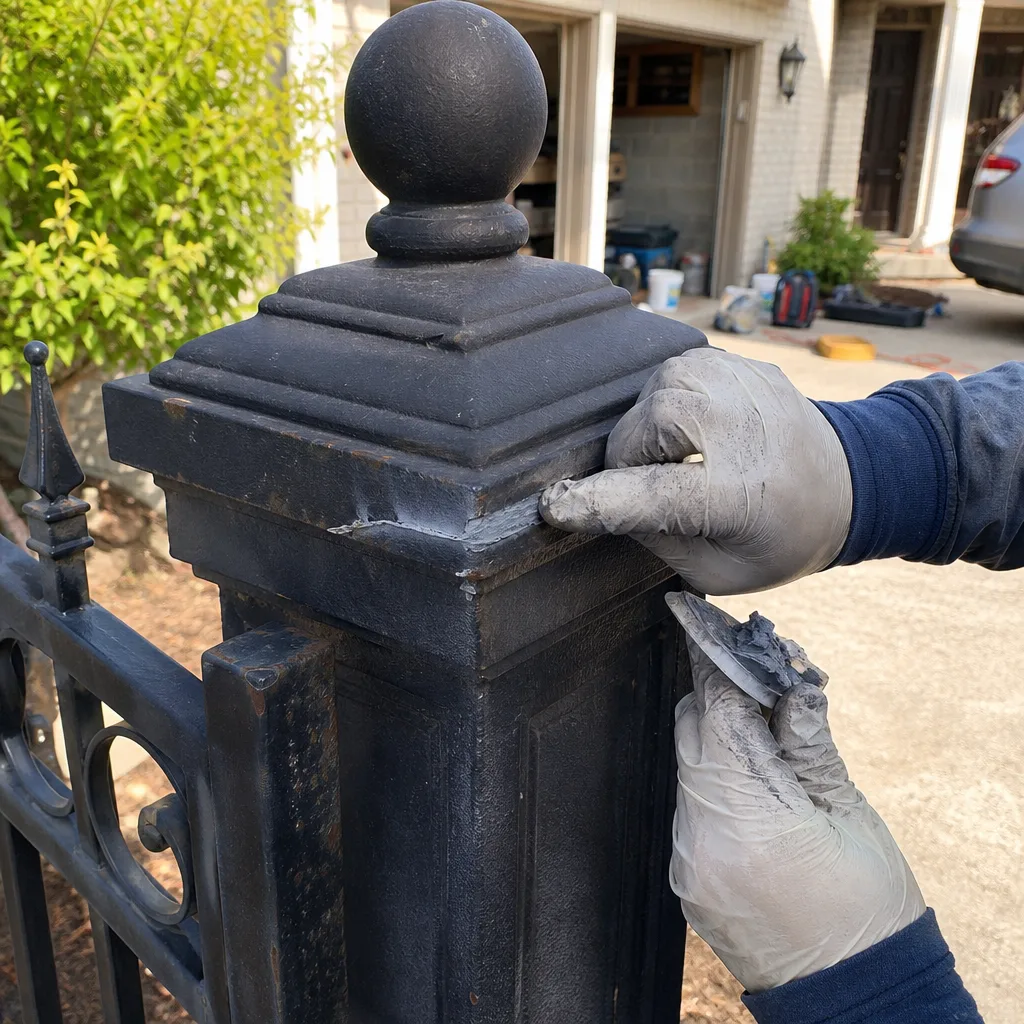
October and November are the most cooperative months for gate work in Bedford. The soil has dried, the clay has contracted, and the ground has settled into its winter position. Temperatures are mild enough that adhesives cure properly, sealants set without fighting sun heat, and a technician can work on a black gate without burning their hands on the steel. More importantly, any alignment correction made in the fall will hold through the winter because the soil isn’t going to move again until the spring rains return.
Fall is the time to correct everything the spring and summer exposed:
- Re-set sagging gates. Adjust hinge shims or install a sag adjuster so the gate hangs evenly and latches without force.
- Correct post lean. If the spring post check found movement under 1/4 inch and the post is still solid, fall is when you correct it with hinge adjustment or a post jack. If it moved more than that, fall is when you schedule the re-pour because the ground is stable enough to dig and pour a proper footing.
- Service the operator. Clean the internal components, check limit switch settings, verify torque settings after any gate weight changes, and replace any seals that show cracking.
- Touch up paint and rust spots. Bedford’s fall humidity is typically lower than spring, which means primer and paint cure properly. Any bare metal exposed during the summer should be primed and painted now, before winter moisture sets in.
- Adjust the photo-eye alignment. A photo-eye (the infrared beam that stops the gate if something crosses the path) that has drifted even an inch out of alignment can cause intermittent gate reversals. Fall is the time to verify both the beam alignment and the mounting brackets are tight.
The other reason fall is the right time for repairs: scheduling. Every Bedford gate company is slammed in March and April when the soil movement damage appears. In October, the same companies have open calendars and can schedule work on your timetable, not theirs. The repair itself takes the same amount of time either way, but the wait to get it done is much shorter in the fall. If you’re considering a new gate entirely, fall is also the best time for Gate Installation in Bedford because the concrete for footings cures properly in moderate temperatures, and the new installation gets three stable months before the next soil movement cycle begins.
Winter Prep: Lubricant Selection and Ice Damage Prevention
Most winter gate damage in Bedford is not ice damage. It’s lubricant failure. The hinges, bearing points, and operator joints on a Bedford gate spend the summer baking in triple-digit heat, which breaks down most off-the-shelf greases into a thick, sticky residue that stops lubricating and starts collecting grit. By January, that degraded lubricant has become a grinding paste, and the first hard freeze turns it into something closer to glue. The gate still opens, but every cycle is wearing the hinge pins and motor gears harder than needed.
The winter prep task that prevents most ice-related damage is not “grease the gate.” It’s replace the lubricant with a temperature-appropriate product. Here’s what that means:
- Hinge pins and bearing points: Use a synthetic lithium-complex grease rated for -20°F to 300°F. It stays fluid in a Bedford January and won’t melt out in a Bedford June. White lithium spray is the most common, but the spray carrier evaporates quickly and leaves a thin film; the grease-in-a-tube version lasts longer for exposed hinge pins.
- Operator arm joints and the worm gear if applicable: Use the lubricant specified by the operator manufacturer. LiftMaster and DoorKing each specify different products for their screw-drive and arm-type operators, and using the wrong one can void the warranty. Check the manual. If you don’t have the manual, the brand’s website has a lubricant chart.
- Chain drive operators: Use a chain lubricant that stays put at low temperatures. A product labeled for motorcycle chains in cold weather works well because it penetrates the links and doesn’t fling off.
- What not to use: WD-40 is a degreaser and moisture displacer, not a lubricant. Any product that says “penetrating oil” will strip the existing lubricant and leave the surface dry. Fiber-bearing greases work fine in industrial settings but not on exposed residential gate hinges.
The other winter task is drainage. Bedford ice events are short, but the water they leave behind does the damage. Check that the gate track (if you have a sliding gate) or the swing path is clear of low spots that collect water. A puddle that freezes under a gate can lift the gate slightly and break a limit switch when the operator tries to close against the ice. If you have a sliding gate, clear the track of leaves and debris before the first freeze because frozen leaf litter in the track creates the same obstruction. If you have a swing gate, verify that the gate closes completely without bouncing off the stop, because a gate left 2 inches open in an ice event becomes a sail that catches wind and loads the hinges sideways.
How to Photograph and Document Gate Alignment Each Season
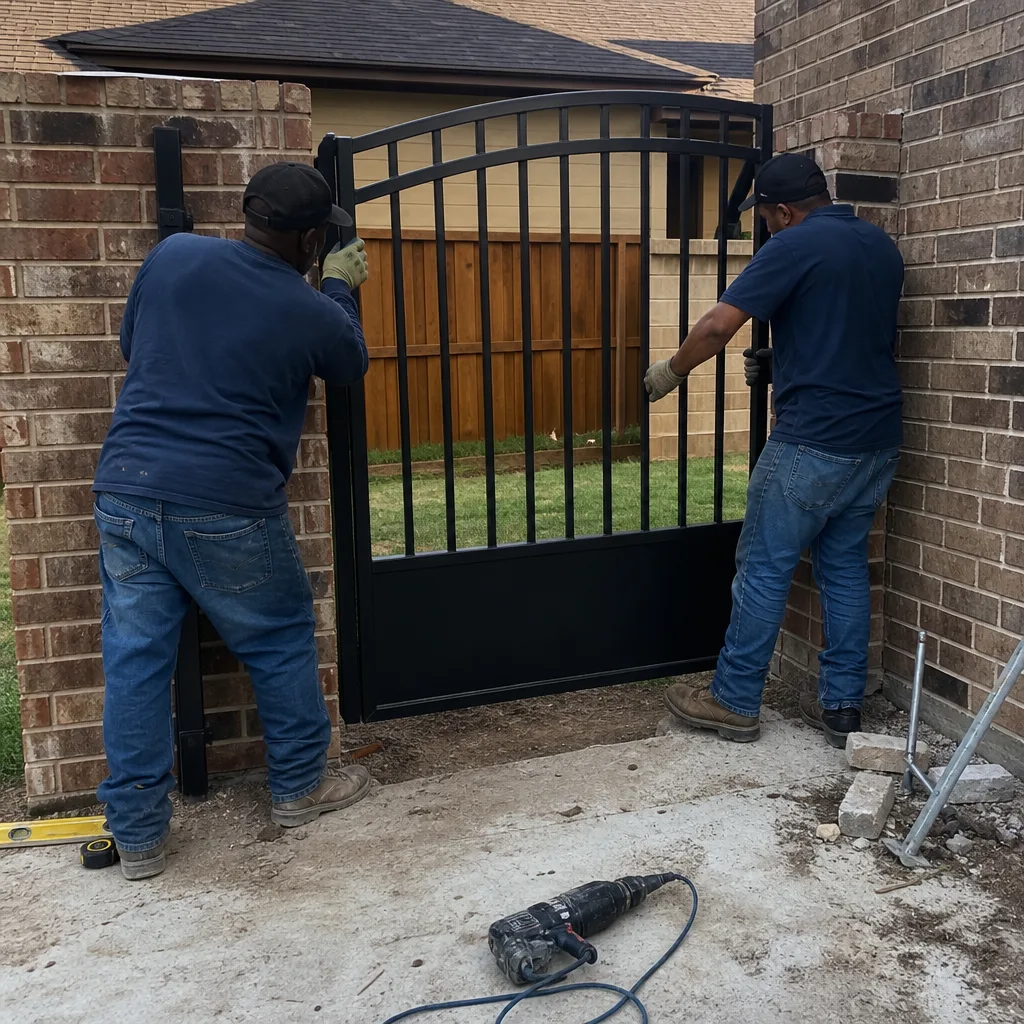
Documentation is the most underused tool in residential gate maintenance. Homeowners take photos of their fence, their deck, their roof, but almost never of their gate. Then something fails, the technician arrives, and the homeowner has no way to show what the gate looked like before the failure. The contractor says the damage was pre-existing. The homeowner says it wasn’t. Neither can prove anything.
Here’s the documentation routine that takes ten minutes per season and gives you an evidence file if anything is ever disputed:
- Photograph the gate in the closed position. Stand directly in front, camera level, the full gate in frame. This photo documents the gap at the latch and the overall hang of the gate.
- Photograph the gate in the open position. Same camera position, same framing. This documents how far the gate opens and whether it rests parallel to the fence line.
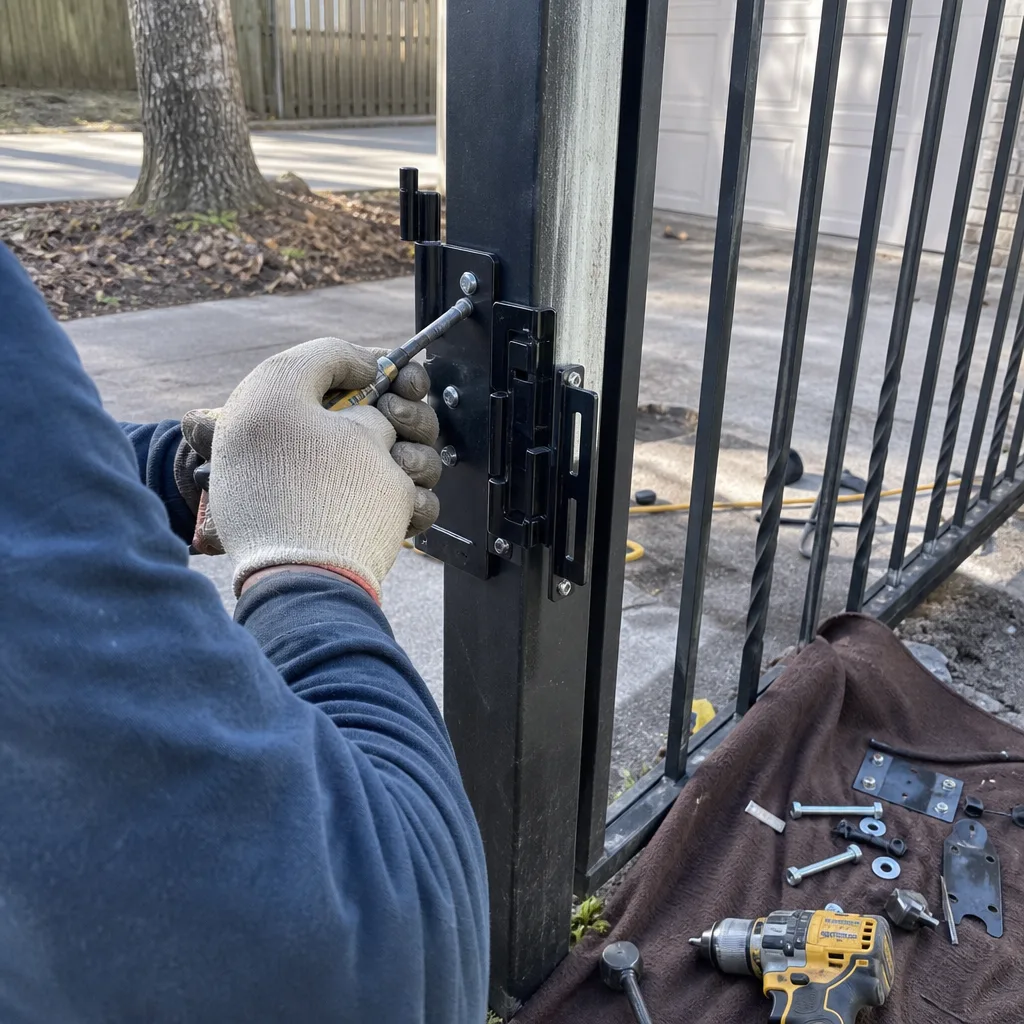
- Photograph the hinge pins close-up. Get within 12 inches and fill the frame with the top and bottom hinge. This documents wear patterns on the pin and barrel.
- Photograph the operator arm joint and limit switch area. If the operator is accessible without removing covers, photograph the arm attachment point and any visible adjustment screws.
- Record a 5-second video of the gate opening and closing. Hold the phone steady and run the full cycle. Audio matters. A gate that sounds smooth in January and grinding in July has a documented audible change.
- Store the photos and video in a folder. Name the folder by date and season, like “2026-03-Spring” and “2026-07-Summer.” If you ever need to file a warranty claim or dispute a repair diagnosis, you have the full history.
This is the same habit Vance Gate Repair brings to every job in Bedford. Every visit leaves a photographed record of what was found, what was adjusted, and what was installed, under Clause 4 of The Haven Standard: evidence on every job, no additional charge. When we hand a Bedford homeowner a photo log of their operator’s limit-switch position before and after adjustment, the conversation about what happened stops being an argument and becomes a record.
Operator-Specific Notes: DoorKing, LiftMaster, Mighty Mule, Elite
Different operator brands fail differently in Bedford’s climate, and knowing what to expect from the brand on your property helps you diagnose problems before they become breakdowns.
DoorKing operators are common on Bedford homes with heavier steel gates and swing or slide configurations. The DoorKing 9000-series swing operators and 1600-series slide operators are built for commercial duty, but residential installs still inherit the same thermal characteristics. They are more heat-tolerant than entry-level residential units, which matters in Bedford summers, but the limit switch assemblies are sensitive to vibration, and a gate that slams or bounces off the stop wears the limit cams faster. If a DoorKing operator starts stopping short of full open, the limit cam is the first thing to check, not the motor.
LiftMaster gate operators dominate the residential swing-gate market in Bedford, and the brand’s common failure point here is the capacitor in the control board after repeated thermal cycling. A LiftMaster that works fine in the morning and trips in the afternoon is usually a heat-soaked control board, not a bad motor. LiftMaster operators also tend to be sensitive to low voltage at the outlet, which matters more in older Bedford homes where the gate circuit shares a run with the garage door or pool equipment.
Mighty Mule operators are the most common entry-level option on Bedford properties, and they’re perfectly adequate for a light gate that’s kept in alignment. The failure mode we see most often is arm-stroke wear on the actuator, which happens when the gate gets heavier over time or the hinges tighten from rust. A Mighty Mule that’s been on the same gate for five years and now moves slower is usually at the end of its useful life, not repairable in any meaningful way.
Elite operators appear on many Bedford properties with slide gates, particularly the SL-3000 series. They are reliable but sensitive to track debris, and the chain tension needs periodic adjustment, which most homeowners don’t discover until the chain jumps a sprocket. A visual check of chain sag every spring and fall prevents that failure. For more on specific operator types and servicing, see our Gate Motor & Opener in Bedford page.
Common Mistakes to Avoid
- Lubricating without cleaning first. Adding fresh grease over old, gritty grease just suspends the grit in the new lubricant and creates a grinding compound. Wipe the surface clean before lubricating.
- Checking the gate only when it stops working. By the time a Bedford gate fails visibly, the underlying misalignment or thermal stress has usually been building for months. Seasonal checks catch the problem at the adjustment stage, not the replacement stage.
- Ignoring gate weight changes. Adding a decorative screen, replacing wood slats with steel, or mounting a heavier latch changes the load on the operator. A motor sized for a 300-pound gate is now pulling 400 pounds, and the duty cycle you thought you had is gone. Update the operator when you update the gate.
- Using the remote as a diagnostic tool. The remote tells you the gate stopped. It doesn’t tell you why. Every diagnosis should start with the manual controls on the operator itself, because that isolates the operator from the radio receiver and any remote interference.
- Waiting until spring to fix fall damage. A gate that was slightly out of alignment in November will be badly out of alignment in March after the clay expands. Fix it when you find it, especially if you found it in the fall when the soil is stable.
- Assuming the motor failed when the gate stops mid-cycle. In Bedford’s heat, a mid-cycle stop is usually a thermal cutout, which is a symptom of load or heat stress, not a dead motor. Replacing the motor without fixing the underlying cause just transfers the problem to the new motor.
When to Call a Professional
Some gate problems are mechanical adjustments you can make with a level, a wrench, and a can of the right lubricant. Others require tools and experience a homeowner shouldn’t be expected to have-see our DIY vs Professional Gate Repair guide for where to draw that line. Call a professional when the post has moved more than 1/4 inch out of plumb, because correcting a shifted footing requires drilling, jacking, and re-pouring concrete in Bedford’s clay. Call a professional when you hear metal-on-metal grinding from the operator gearbox or the hinge pins, because that wear is already past the adjustment stage. Call a professional when any wiring is involved. Gate operators carry line voltage inside the cabinet, and opening a control box without disconnecting power is the fastest way to turn a $300 repair into an emergency room visit. Vance Gate Repair Bedford offers free estimates on all gate work in Bedford, with a written price handed over before any work begins. Call (817) 572-8590 and a live person answers, any hour, any day.
Frequently Asked Questions
Twice a year, once in early spring and once in mid-fall. The spring service catches post movement from the wet-season clay expansion, and the fall service corrects it while the soil is stable. A gate that’s professionally inspected and serviced on this schedule in Bedford will typically last 15 to 20 years before needing major component replacement, and the operator will survive the full warranty period without thermal damage.
A seasonal inspection and adjustment visit in Bedford typically runs between $125 and $225, depending on the gate type and whether any parts like lubricant, hinge shims, or limit switches need replacement. More involved corrections, like resetting a post or replacing an operator arm, add to that base. Every Vance Gate Repair Bedford quote is written and handed over before work starts, so there’s no range creep at the end.
Yes, and dragging is almost always a hinge or post problem, not a motor problem. The technician checks post plumb, hinge wear, and gate level, then either re-shims the hinges or corrects the post position. In some Bedford cases where the post has shifted in expansive clay, the fix requires a footing re-pour. Call (817) 572-8590 for an exact diagnosis and a written price.
In Bedford’s sustained summer heat, that mid-cycle stop is usually a thermal cutout, which means the motor’s internal temperature sensor tripped to protect the windings from overheating. The underlying cause is almost always added load from gate misalignment, degraded lubricant creating friction, or loss of shade over the operator. The fix is to correct the load problem, not replace the motor.
Yes. Vance Gate Repair Bedford services nine major automation brands including DoorKing, LiftMaster, Mighty Mule, Elite, FAAC, BFT, Linear, Viking, and Ghost Controls. We repair whatever motor is already on the property rather than steering you toward a replacement. The diagnosis and the written quote come first, and the brand only matters for parts and settings.
Post movement from clay soil expansion. The spring rains saturate Bedford’s expansive clay, the soil swells, and gate posts shift enough to throw the gate out of alignment. The gate then binds at the latch or drags at the hinge side, and the motor works harder until it fails. Checking post plumb in early March catches the movement before the binding starts.
The Bottom Line
Bedford gates don’t fail on a calendar schedule. They fail when the clay moves, when the heat loads the motor past its rating, and when lubricant degrades past its service life. A seasonal maintenance routine built around those three mechanisms, not around spring-summer-fall-winter checklists from a national guide, is the difference between a gate that runs quietly for two decades and a gate that needs a new motor every few years. Check post plumb in early March. Check lubricant in December. Document everything with photos, and correct small problems in the fall when the soil is stable. If any of it moves beyond what you can measure with a level and a wrench, Vance Gate Repair Bedford handles it with a written price before work starts and a photo record when the tech leaves. For more guides & resources on keeping your gate running, visit our blog.
Written by Adrian Vance, Owner at Vance Gate Repair Bedford, serving Bedford since 2014.